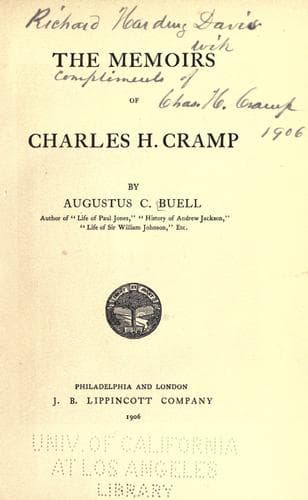
Cramp, Charles Henry, 1828-1913; Naval architects -- United States -- Biography
The results of the year 1884 were chiefly interesting because they
demonstrated, after much bitter debate and heated discussion, that the
cause of the new navy had acquired impetus sufficient to vanquish the
party passions of even so violent a Presidential campaign as that which
marked that year. That campaign over, the Forty-eighth Congress, at its
second session, took up with zeal the promotion of the new navy, and the
act approved March 3, 1885, authorized four additional vessels, toward
the construction of which $1,895,000 was appropriated with practical
unanimity. The Act of March 3, 1885, marked an epoch in the history of
the new navy. Prior to that time, the legislative practice had been to
require separate enactment to authorize the construction of new vessels
for the navy. In this case the authorization appeared in the body of the
regular Naval Appropriation Bill, and that practice has been followed
ever since. This innovation was debated in Committee of the Whole, and a
point of order made to strike out the proposed authorization. The point
of order was overruled by Hon. James B. McCreary, a Democratic member
from Kentucky, with the approval of Speaker John G. Carlisle; Mr.
McCreary being Chairman of the Committee of the Whole on the Naval Bill.
Mr. McCreary ruled: 1st. That legislation in pursuance of any settled or
established policy was germane in the annual appropriation bill which
dealt with that subject matter. 2d. That the increase of the navy was
clearly a settled and established policy, to which all branches of the
government were committed. 3d. That in view of that fact the
authorization of additional vessels of war could not be considered new
legislation in the meaning of the rules, but must be regarded as
progressive legislation in a direction previously sanctioned by
Congress; that therefore the authorization of new ships was germane to
the regular naval appropriation bill for each year, and was in order.
Public-domain text, read in full here on John Shaqi.
Reviews
Reviews
No reviews yet
Be the first to share your thoughts on this work.
Elsewhere in the archive
Join the Discussion
Join the discussion
Sign in to leave a comment or review.
Sign InorCreate an account