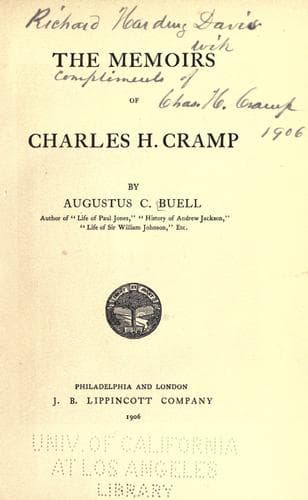
Cramp, Charles Henry, 1828-1913; Naval architects -- United States -- Biography
“Certain subsequent changes in the _personnel_ that were made in the
Bureau of Steam Engineering—Mr. Melville having been placed at the
head of it—modified the situation, and he joined the Secretary in
his efforts with his usual vigor. A part of the trouble I refer to
in getting a start on the work was owing to lack of experience and
knowledge of contract and specification requirements which were
placed in the Law Department of the navy for the first time.
“The Law Department of the navy at that time was beginning to make a
show, and to them, under some mistake, was delegated the getting up
of the contracts and specifications. It was here where my trouble
commenced. The Law Department endeavored to provide for everything
that could possibly occur, or everything that they thought would
occur, and for many matters that could not be considered at all; and
the specifications soon began to assume enormous proportions, being
filled with impossible requirements.
“I got over most of these difficulties and minor details which they
intended to lug into the contract by having introduced at the
termination of certain paragraphs of the specifications, where
explanations were unsatisfactory, misleading, and inadequate, a
clause using the words: ‘As the Department may determine.’
“My previous experience with the Navy Department and naval officials
generally led me to believe that I could always make out my case
when it was right.
“At the beginning of the work, Mr. Whitney notified us that he
considered himself and all the naval officials as partners and
associates of the contractor, each mutually interested and
determined to get the best vessel they could for the navy. He
considered that the government ought to co-operate with the
contractors, and that the contractors should in turn co-operate with
the government; that the inspector was not an enemy, and never once
considered him so. He considered it was his duty to afford all
encouragement possible in aiding the contractors to carry out the
plans. During the close of a conversation which I had with Mr.
Whitney at one time during that period, he said to me: ‘I want you
to inform me of what you see going wrong, no matter where the fault
originated; and I will hold you personally responsible in every case
where you neglect to inform me whenever anything is not going right
or not being done right, whether it be your own fault or that of the
government.’
Public-domain text, read in full here on John Shaqi.
Reviews
Reviews
No reviews yet
Be the first to share your thoughts on this work.
Elsewhere in the archive
Join the Discussion
Join the discussion
Sign in to leave a comment or review.
Sign InorCreate an account