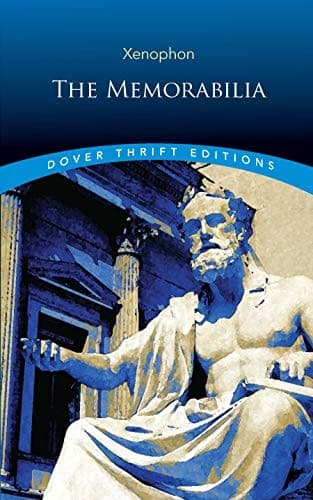
Classical literature; Philosophers, Ancient -- Biography -- Early works to 1800; Socrates -- Trials, litigation, etc. -- Early works to 1800
And if we turn to private life, what better protection can a man
have than obedience to the laws? This shall be his safeguard against
penalties, his guarantee of honours at the hands of the community; it
shall be a clue to thread his way through the mazes of the law courts
unbewildered, secure against defeat, assured of victory. (28) It is
to him, the law-loving citizen, that men will turn in confidence when
seeking a guardian of the most sacred deposits, be it of money or be it
their sons or daughters. He, in the eyes of the state collectively, is
trustworthy--he and no other; who alone may be depended on to render to
all alike their dues--to parents and kinsmen and servants, to friends
and fellow-citizens and foreigners. This is he whom the enemy will
soonest trust to arrange an armistice, or a truce, or a treaty of peace.
They would like to become the allies of this man, and to fight on
his side. This is he to whom the allies (29) of his country will most
confidently entrust the command of their forces, or of a garrison, or
their states themselves. This, again, is he who may be counted on to
recompense kindness with gratitude, and who, therefore, is more sure of
kindly treatment than another whose sense of gratitude is fuller. (30)
The most desirable among friends, the enemy of all others to be avoided,
clearly he is not the person whom a foreign state would choose to go
to war with; encompassed by a host of friends and exempt from foes, his
very character has a charm to compel friendship and alliance, and before
him hatred and hostility melt away.
(28) Or, "ignorant of hostile, assured of favourable verdict."
(29) Lit. "the Allies," e.g. of Sparta or of Athens, etc.
(30) Lit. "From whom may the doer of a deed of kindness more
confidently expect the recompense of gratitude than from your
lover of the law? and whom would one select as the recipient of
kindness rather than a man susceptible of gratitude?"
And now, Hippias, I have done my part; that is my proof and
demonstration that the "lawful" and "law-observant" are synonymous
with the "upright" and the "just"; do you, if you hold a contrary view,
instruct us. (31)
(31) For the style of this enconium (of the {nomimos}) cf. "Ages." i.
36; and for the "Socratic" reverence for law cf. Plat. "Crito."
Then Hippias: Nay, upon my soul, Socrates, I am not aware of holding any
contrary opinion to what you have uttered on the theme of justice. (32)
(32) Lit. "the just and upright," {tou dikaiou}.
Soc. But now, are you aware, Hippias, of certain unwritten laws? (33)
(33) See Soph. "Antig." "Oed. T." 865, and Prof. Jebb ad loc.; Dem.
"de Cor." 317, 23; Aristot. "Rhet." I. xiii.
Yes (he answered), those held in every part of the world, and in the
same sense.
Can you then assert (asked Socrates) of these unwritten laws that men
made them?
Public-domain text, read in full here on John Shaqi.
Reviews
Reviews
No reviews yet
Be the first to share your thoughts on this work.
Elsewhere in the archive
Join the Discussion
Join the discussion
Sign in to leave a comment or review.
Sign InorCreate an account