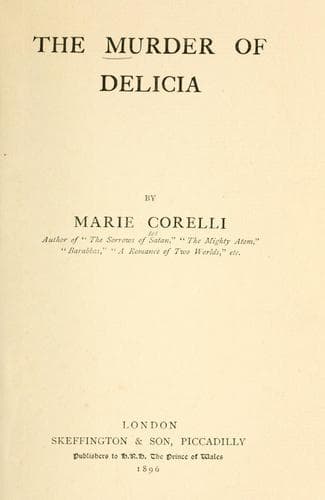
Detective and mystery stories; English fiction -- 19th century
to which I particularly wish to call the attention of the more
thoughtful of my readers is that these very sort of men (when they have
secured the ignoble end of their ambition, namely, the rich woman to
live upon, under matrimonial sufferance) are the first to run down
women’s work, women’s privileges, women’s attainments and women’s
honour. The man who owes his dinner to his wife’s unremitting toil is
often to be heard speaking of the ‘uselessness’ of women, their
frivolity and general incapacity. And in cases where the woman’s
intellectual ability is brought into play, and where the financial
results of her brain work are such that they enable the husband to live
as he likes, surrounded with every ease and comfort, then it is that at
the clubs, or in any other place where he can give himself sublime airs
of independence, he will frequently express regret, in grandiloquent
terms, that there should be any women who ‘want to be clever’; they are
always ‘unsexed.’ This word ‘unsexed’ is always cast at brilliant women
by every little halfpenny ragamuffin of the press that can get a
newspaper corner in which to hide himself for the convenience of
throwing stones. The woman who paints a great picture is ‘unsexed’; the
woman who writes a great book is ‘unsexed’; in fact, whatever woman does
that is higher and more ambitious than the mere act of flinging herself
down at the feet of man and allowing him to walk over her, makes her in
man’s opinion unworthy of his consideration as woman; and he fits the
appellation ‘unsexed’ to her with an easy callousness, which is as
unmanly as it is despicable.
Public-domain text, read in full here on John Shaqi.
Reviews
Reviews
No reviews yet
Be the first to share your thoughts on this work.
Join the Discussion
Join the discussion
Sign in to leave a comment or review.
Sign InorCreate an account