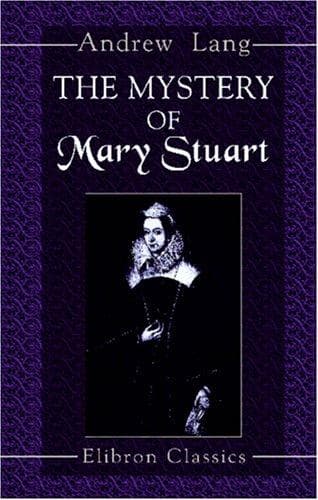
Mary, Queen of Scots, 1542-1587; Queens -- Scotland -- Biography; Scotland -- History -- Mary Stuart, 1542-1567
The foremost person is the Queen, a tall girl of twenty-four, with brown
hair, and sidelong eyes of red brown. Such are her sidelong eyes in the
Morton portrait; such she bequeathed to her great-great-grandson, James,
‘the King over the Water.’ She was half French in temper, one of the proud
bold Guises, by her mother’s side; and if not beautiful, she was so
beguiling that Elizabeth recognised her magic even in the reports of her
enemies.[5]
‘This lady and Princess is a notable woman,’ said Knollys; ‘she showeth a
disposition to speak much, to be bold, to be pleasant, and to be very
familiar. She showeth a great desire to be avenged of her enemies, she
showeth a readiness to expose herself to all perils in hope of victory,
she delighteth much to hear of hardiness and valiance, commending by name
all approved hardy men of her country, although they be her enemies, and
concealeth no cowardice even in her friends.’
There was something ‘divine,’ Elizabeth said, in the face and manner which
won the hearts of her gaolers in Loch Leven and in England. ‘Heaven bless
that sweet face!’ cried the people in the streets as the Queen rode by, or
swept along with the long train, the ‘targetted tails’ and ‘stinking pride
of women,’ that Knox denounced.
She was gay, as when Randolph met her, in no more state than a burgess’s
wife might use, in the little house of St. Andrews, hard by the desecrated
Cathedral. She could be madly mirthful, dancing, or walking the black
midnight streets of Edinburgh, masked, in male apparel, or flitting ‘in
homely attire,’ said her enemies, about the Market Cross in Stirling. She
loved, at sea, ‘to handle the boisterous cables,’ as Buchanan tells.
Pursuing her brother, Moray, on a day of storm, or hard on the doomed
Huntly’s track among the hills and morasses of the North; or galloping
through the red bracken of the October moors, and the hills of the
robbers, to Hermitage; her energy outwore the picked warriors in her
company. At other times, in a fascinating languor, she would lie long
abed, receiving company in the French fashion, waited on by her Maries,
whose four names ‘are four sweet symphonies,’ Mary Seton and Mary Beaton,
Mary Fleming and Mary Livingstone. To the Council Board she would bring
her woman’s work, embroidery of silk and gold. She was fabled to have
carried pistols at her saddle-bow in war, and she excelled in matches of
archery and pall-mall.
[Illustration: Mary at Eighteen.]
Public-domain text, read in full here on John Shaqi.
Reviews
Reviews
No reviews yet
Be the first to share your thoughts on this work.
Join the Discussion
Join the discussion
Sign in to leave a comment or review.
Sign InorCreate an account