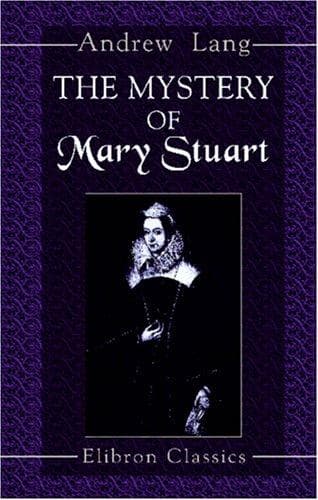
Mary, Queen of Scots, 1542-1587; Queens -- Scotland -- Biography; Scotland -- History -- Mary Stuart, 1542-1567
There is a crowd of squires; loyal, gallant Arthur Erskine, Willie
Douglas, who drew Mary forth of prison, the two Standens, English
equerries of Darnley, whose lives are unwritten romances (what one of them
did write is picturesque but untrustworthy), Lennox Lairds, busy Minto,
Provost of Glasgow, and Houstoun, and valiant dubious Thomas Crawford,
called ‘Gauntlets,’ and shifty Drumquhassel; spies like Rokeby, assassins
if need or opportunity arise; copper captains like Captain Cullen; and
most truculent of all, Bothwell’s Lambs, young Tala, who ceased reading
the Bible when he came to Court; and the Black Laird of Ormistoun, he who,
on the day of his hanging, said ‘With God I hope this night to sup.’ Said
he, ‘Of all men on the earth I have been one of the proudest and (_sic_)
high-minded, and most filthy of my body. But specially I have shed
innocent blood of one Michael Hunter with my own hands. Alas therefore,
because the said Michael, having me lying on my back, having a pitchfork
in his hand, might have slain me if he pleased, but did it not, which of
all things grieves me most in conscience.... Within these seven years I
never saw two good men, nor one good deed, but all kind of wickedness; and
yet my God would not suffer me to be lost, and has drawn me from them as
out of Hell ... for the which I thank him, and I am assured that I am one
of his Elect.’ This devotee used to hang about Mary in Carlisle, when she
had fled into England. ‘Not two good men, nor one good deed,’ saw
Ormistoun, in seven long years of riding the Border, and following
Bothwell to Court or Warden’s Raid. Few are the good men, rare are the
good deeds, that meet us in this tragic History. ‘There is none that doeth
good, no, not one.’
But behind the men and the time are the Preachers of Righteousness, grim,
indeed, as their Geneva gowns, not gentle and easily entreated, crying
out on the Murderess, Adulteress, Idolatress, to be led to block or stake,
but yet bold to rebuke Bothwell when he had cowed all the nobles of the
land. The future was with these men, with the smaller barons or lairds,
and with sober burgesses, like the discreet author of the ‘Diurnal of
Occurrents,’ and with honest hinds, like Michael Hunter, whom Ormistoun
slew in cold blood. The social and religious cataclysm withdrew its waves:
a new Creed grew into the hearts of the people: intercourse with England
slowly abated the ruffianism of the Lords: slowly the Law extended to the
Border: swiftly the bonds of feudal duty were broken: but not in Mary’s
time.
Public-domain text, read in full here on John Shaqi.
Reviews
Reviews
No reviews yet
Be the first to share your thoughts on this work.
Join the Discussion
Join the discussion
Sign in to leave a comment or review.
Sign InorCreate an account