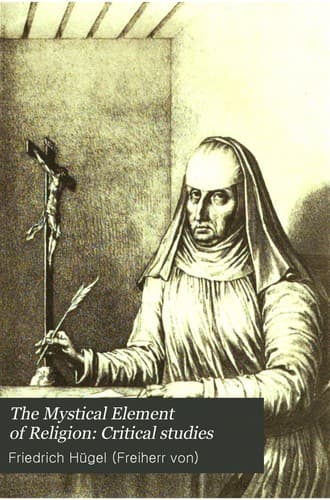
The Mystical Element of Religion, as studied in Saint Catherine of Genoa and her friends, Volume 2 (of 2)Hügel, Friedrich, Freiherr von
Religion
The Mystical Element of Religion, as studied in Saint Catherine of Genoa and her friends, Volume 2 (of 2)
Hügel, Friedrich, Freiherr von
Catherine, of Genoa, Saint, 1447-1510
The difficulties of such a combination of convictions are, of course,
numerous and great. Psychologically it seems hard to understand why
this remnant of good disposition should be unable to germinate further
and further good, so that, at last, good would leaven the whole
soul. From the point of view of any Theodicy, it appears difficult
to justify the unending exclusion of such a soul from growth in, and
the acquirement of, a predominantly good will and the happiness that
accompanies such a will. And the testimony of Our Lord Himself and of
the general doctrine of the Church appear definitely opposed: for does
not His solemn declaration: “Hell, where their worm dieth not” (Mark
ix, 48), find its authoritative interpretation in the common Church
teaching as to the utterly reprobate will of the lost? And indeed
Catherine herself, in her great saying that if but one little drop of
Love could fall into Hell (that is, surely, if but the least beginning
of a right disposition towards God could enter those souls) Hell would
be turned into Heaven, seems clearly to endorse this position.
And yet, we have full experience in this life of genuinely good
dispositions being present, and yet not triumphing or even spreading
within the soul; of such conditions being, in various degrees, our own
fault; and of such defeat bringing necessarily with it more or less of
keen suffering.--There would be no injustice if, after a full, good
chance and sufficient aid had been given to the soul to actualize its
capabilities of spiritual self-constitution, such a soul’s deliberately
sporadic, culpably non-predominant, good did not, even eventually, lead
to the full satisfaction of that soul’s essential cravings.--The saying
attributed to Our Lord, which appears in St. Mark alone, is a pure
quotation from Isaiah lxvi, 24 and Ecclesiasticus vii, 17, and does not
seem to require more than an abiding distress of conscience, an eternal
keenness of remorse.
Public-domain text, read in full here on John Shaqi.
Reviews
Reviews
No reviews yet
Be the first to share your thoughts on this work.
Elsewhere in the archive
Join the Discussion
Join the discussion
Sign in to leave a comment or review.
Sign InorCreate an account