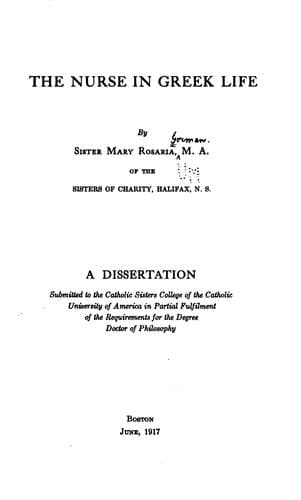
Greek literature -- History and criticism; Nurses; Thesis (Ph. D.)
The subject matter of these tales was the actions of the gods and heroes
of mythology: γεγονὼς αὐτὸς ἐκ Διός τε καὶ τῆς τοῦ δήμου ἀρχηγέτου
θυγατρός· ἅπερ αἱ γραῖαι ᾄδουσι.[255] Hence the telling of them might
have the greatest influence on the moral education of the children.
Plato, therefore, enlarges on the care to be taken in their selection,
so that the children might not receive immoral impressions and false
ideas: ἆρ’ οὖν ῥᾳδίως οὕτω παρήσομεν τοὺς ἐπιτυχόντας ὑπὸ τῶν
ἐπιτυχόντων μύθους πλασθέντας ἀκούειν τοὺς παῖδας καὶ λαμβάνειν ἐν ταῖς
ψυχαῖς ὡς ἐπὶ τὸ πολὺ ἐναντίας δόξας ἐκείναις, ἄς ἐπειδὰν τελεωθῶσιν,
ἔχειν οἰησόμεθα δεῖν αὐτούς;[256] He therefore establishes a censorship
of the writers of fiction, and rejects even Hesiod and Homer: πρῶτον δὴ
ἡμῖν, ὡς ἔοικεν, ἐπιστατητέον τοῖς μυθοποιοῖς, καὶ ὃν μὲν ἂν καλὸν
ποιήσωσιν, ἐγκριτέον, ὃν δ’ ἂν μή, ἀποκριτέον. τοὺς δ’ ἐγκριθέντας
πείσομεν τὰς τροφούς τε καὶ μητέρας λέγειν τοῖς παισί.[257] As a matter
of fact, all sins that men could commit were imputed to the gods by
these poets.[258]
The story of Zeus who thrust his father from the throne would teach
children disloyalty to parents,[259] while his amorous connections with
goddesses and mortals could not but have a pernicious effect on young
minds. Plutarch thinks nurses should be restrained in the selection of
these tales: μὴ τοὺς τυχόντας μύθους τοῖς παιδίοις λέγειν, ἵνα μὴ τὰς
τούτων ψυχὰς ἐξ ἀρχῆς ἀνοίας καὶ διαφθορᾶς ἀναπίμπλασθαι συμβαίνῃ,[260]
and Aristotle wishes to place these matters under the supervision of the
Paedonomoi: καὶ περὶ λόγων τε καὶ μύθων ποίους τινὰς ἀκούειν δεῖ τοὺς
τηλικούτους ἐπιμελὲς ἔστω τοῖς ἄρχουσιν, οὓς καλοῦσι παιδονόμους.[261]
On the other hand, ancient mythology is so full of humor and imagination
and so rich in amusing adventures, that many of these same stories might
do excellent service to-day as nursery tales. For example, the story of
the inventiveness of Hermes even in his cradle, the adventures of
Odysseus, the labors of Hercules, and many others would furnish
enjoyment to many a child.[262]
Philostratus records that nurses made use of the tale of Theseus and
Ariadne: ὅτι τὴν Ἀριάδνην ὁ Θησεὺς ἄδικα δρῶν κατέλιπεν ἐν Δίᾳ τῇ νήσῳ
καθεύδουσα τάχαν, του καὶ τίτθης διάκησας, σοφαὶ γὰρ ἐκεῖναι τὰ τοιαῦτα
καὶ δακρύουσεν ἐπ’ αὐτοῖς ὅταν ἐθελωσιν.[263]
The magic rings which Timolous wishes for in Lucian, seem to have been
borrowed from a nursery tale,[264] and the story of the ring of Gyges,
which rendered its wearer invisible, contains elements of the nursery
tale.[265] Stories told for comfort and consolation are alluded to by
Euripides, where Amphitryon counsels Megara to tell tales to the
children disturbed over their father’s absence:
ἀλλ’ ἡσύχαζε καὶ δακρυρρόους τέκνων
πηγὰς ἀφαίρει καὶ παρευκήλαι λόγοις,
κλέπτουσα μύθοις ἀθλίνους κλοπὰς ὅμως.[266]
Public-domain text, read in full here on John Shaqi.
Reviews
Reviews
No reviews yet
Be the first to share your thoughts on this work.
Join the Discussion
Join the discussion
Sign in to leave a comment or review.
Sign InorCreate an account