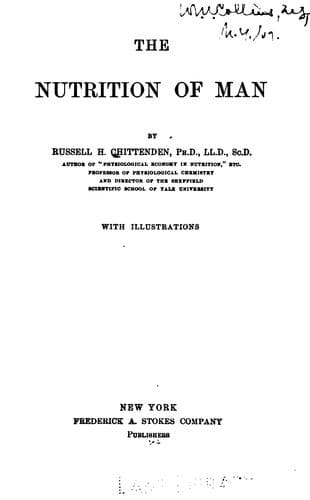
The nutrition of manChittenden, R. H. (Russell Henry)
Science
The nutrition of man
Chittenden, R. H. (Russell Henry)
Nutrition
TOPICS: Relation of muscle work to energy exchange. Views of Liebig.
Experimental evidence. Relation of nitrogen excretion to muscle
work. Significance of the respiratory quotient in determining
nature of the material oxidized. Fats and carbohydrates as source
of energy by muscles. Utilization of proteid as a source of energy.
Formation of carbohydrate from proteid. Significance of proteid
metabolism. Theories of Carl Voit. Morphotic proteid. Circulating
proteid. General conception of proteid metabolism on the basis of
Voit’s theories. Pflüger’s views of proteid metabolism. Rapidity of
elimination of food nitrogen. Methods by which nitrogen is split off
from proteid. Theories of Folin. Significance of creatinin and of the
percentage distribution of excreted nitrogen. Endogenous or tissue
metabolism. Exogenous or intermediate metabolism. Needs of the body
for proteid food possibly satisfied by quantity sufficient to meet
the demands of tissue or endogenous metabolism. Bearings of Folin’s
views on current theories and general facts of proteid metabolism.
Large proteid reserve and voluminous exogenous metabolism probably
not needed. Importance of feeding experiments in determining the true
value of different views.
As we have already seen, every form of muscular activity begets an
increase in the energy exchange of the body. Between the two extremes
of absolute rest and excessive muscular exertion, we find differences
of 2000 calories or more per day as representing the degree of chemical
decomposition corresponding to the particular state of muscular
activity. The work of the involuntary muscles, such as have to do with
peristalsis, respiration, rhythmical beat of the heart, etc., is a
relatively constant factor, though naturally subject to some variation,
as has been pointed out in other connections. External muscular
activity, however, is the one factor above all others that modifies the
rate of energy exchange. A little longer walk, a heavier load to carry,
a steeper hill to climb, any increase great or small in the activity
of the muscles of the body, means a corresponding increase in chemical
decomposition, with increased output of the ordinary products of tissue
oxidation. The material so consumed, or oxidized, must be made good
to hold the body in equilibrium; the supplies drawn upon are to be
replaced, if the tissues of the body are to be kept in a proper state
of efficiency.
Public-domain text, read in full here on John Shaqi.
Reviews
Reviews
No reviews yet
Be the first to share your thoughts on this work.
Elsewhere in the archive
Join the Discussion
Join the discussion
Sign in to leave a comment or review.
Sign InorCreate an account