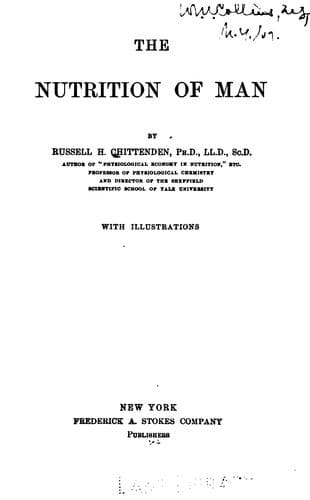
The nutrition of manChittenden, R. H. (Russell Henry)
Science
The nutrition of man
Chittenden, R. H. (Russell Henry)
Nutrition
If a low proteid diet works so inimically on high proteid animals as
Munk and Rosenheim thought, it would naturally be expected that the
small proteid ration followed so long by Jägerroos would have resulted
in the appearance of marked symptoms, at least a gradual and persistent
falling off in body-weight, inability to maintain nitrogen equilibrium,
etc.; but none of these things occurred. In Munk’s first experiment,
the animal was given no fresh meat whatever during four weeks. Is it
not quite possible that in the abrupt cutting off of this wonted form
of food a disturbance may have been set up in the gastro-intestinal
tract, which paved the way for the more serious results that followed?
Jägerroos used only fresh, uncooked meat in his experiments, and laid
great stress upon the importance of not departing any more than was
necessary from the accustomed form of diet. The writer is strongly of
the opinion that sufficient stress has not been laid upon this phase of
the subject. A satisfactory diet for dog as for man must meet ordinary
hygienic requirements; it must not only be sufficient in amount, but
it must be easily digestible, of accustomed flavor, appealing to eye,
nostrils, and palate, with reasonable variation occasionally and of
moderate volume. With due regard to these conditions, I believe with
Jägerroos that not much attention need be paid to the proportion
of nitrogen therein, for however small the amount it will be found
sufficient to meet the needs of the body.
These are the results, collectively, so frequently used to point
a moral for man: Beware of the possible danger of reducing the
consumption of proteid food below the commonly accepted dietary
standards! We must admit, however, that there is a woeful lack of
agreement in these results, and it is difficult to prevent a shadow of
doubt from creeping over us as we try to depict for ourselves the way
in which a low proteid ration exerts its deleterious effect on dogs.
I do not believe that radical changes in diet, whether they involve
increase or decrease in total quantities, or in specific elements of
the diet, can be made suddenly without danger of some disturbance of
the gastro-intestinal tract or other parts of the economy, either
in dog or man. It is reasonable to believe also that a high proteid
feeder, like a dog, with his more limited dietary, will be far more
sensitive to great changes than omnivorous man with his wider range of
foodstuffs. Moreover, there is just as good ground for believing that
in any animal, excess of proteid is as dangerous as a low proteid diet.
Too great a disturbance in the nutritive balance, whether it involves
excess or reduction in the amount of a given foodstuff, is liable to be
attended with serious disturbance in any sensitive organism.
Public-domain text, read in full here on John Shaqi.
Reviews
Reviews
No reviews yet
Be the first to share your thoughts on this work.
Elsewhere in the archive
Join the Discussion
Join the discussion
Sign in to leave a comment or review.
Sign InorCreate an account