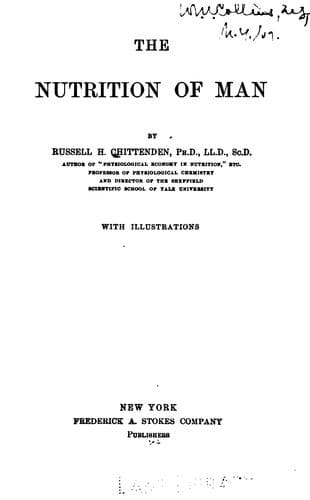
The nutrition of manChittenden, R. H. (Russell Henry)
Science
The nutrition of man
Chittenden, R. H. (Russell Henry)
Nutrition
Finally, we may call attention to the many possibilities of an
intelligent modification of the daily diet to the temporary needs
of the individual. The season of the year, summer and winter, the
climate, the degree of activity of the body, the state of health,
temporary ailments, etc., all present special conditions which admit
of particular dietetic treatment. In hot summer weather, for example,
there is plainly less need for food than in the cold winter season,
especially for fat with its high calorific value. During the cold part
of the year, the lower temperature of the surrounding air, with the
tendency toward greater muscular activity, calls for more extensive
chemical decomposition in order to meet the demand for heat, and the
energy of muscular contraction. There is perhaps no special reason for
any material change in the amount of proteid food consumed in the two
seasons, except in so far as it may seem desirable at times to take
advantage of the well-known stimulating properties of proteid to whip
up the general metabolism of the body, in harmony with the principle
that all metabolic processes may need spurring to meet the demands of a
greatly lowered temperature in the surrounding air.
Fuel value, however, should be increased somewhat during the winter
months in our climate. Fat promises the largest amount of energy,
but there is more of a tendency to store up excess of fat than of
carbohydrate, hence the latter foods have certain advantages as a
source of the additional energy needed during cold weather. In warm
weather, it should be our aim to diminish unnecessary heat production
as much as possible, though it must be remembered that the body is
to be maintained approximately at least in equilibrium, and this
calls for an adequate amount of food. Lighter foods, however, may be
advantageously employed, such as fruits, vegetables, fresh fish, etc.
Fats and fat meats especially are to be avoided, not only because
there is no specific need for them, but particularly on account of a
greater sensitiveness of the gastro-intestinal tract during the hot
seasons of the year, that is liable to result in a disturbance whenever
undue quantity of rich or heavy food is taken. Further, in hot summer
weather we may advantageously live more largely on foods served cold,
and thereby avoid the heat ordinarily introduced into the body by
hot fluids and solids. These, however, are all obvious physiological
truths, constituting a form of physiological good sense the application
of which calls for no special expert knowledge.
Public-domain text, read in full here on John Shaqi.
Reviews
Reviews
No reviews yet
Be the first to share your thoughts on this work.
Elsewhere in the archive
Join the Discussion
Join the discussion
Sign in to leave a comment or review.
Sign InorCreate an account