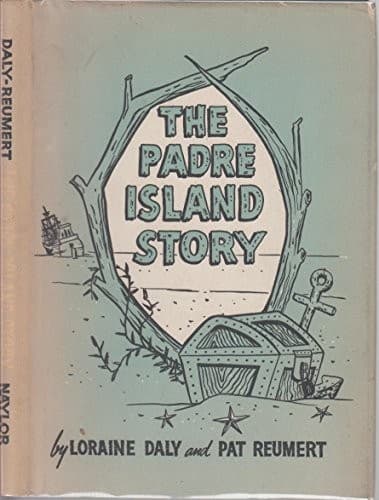
Padre Island (Tex.); Rio Grande Valley (Colo.-Mexico and Tex.) -- Description and travel
As a cultural center, Corpus Christi frequently assumes a Parisian air
when writers and artists convene in this sunny city. The CORPUS CHRISTI
JUNIOR MUSEUM is fun for children. Here for the children is a colorful
collection of Indian relics and Padre Island shells. There are also many
other fine museums.
Only an hour’s drive from Corpus Christi is the ARANSAS NATIONAL
WILDLIFE REFUGE at Austwell, which offers sights of the nation’s
wildlife in its own habitat; birds and game abound. Even the whooping
crane sleeps here during the months from November to April.
ROCKPORT and FULTON BEACH, in the Corpus Christi area, are famous resort
cities, aristocratically adorned with lovely wind-bent oak trees. In
nearby GOOSE ISLAND STATE PARK is a MARINE LABORATORY and AQUARIUM.
The Annual Tarpon Rodeo has made nearby PORT ARANSAS famous, and
visitors have been introduced to its fine restaurants, noted for their
seafood.
Leaving Corpus Christi, Highway 77 cuts through Kingsville, headquarters
of the fabulous KING RANCH of nearly a million acres, where roam
eighty-five thousand head of cattle. The acquisition of this huge
acreage was begun in 1853 by Richard King, one of the early steamboat
captains who navigated the Rio Grande. Here was developed the only breed
of cattle originated in the Western Hemisphere—the King Ranch Santa
Gertrudis breed. Inside the fifteen hundred miles of fencing are some
three hundred windmills. The ranch is famous, also, for breeding
thoroughbred horses, two of which, Assault and Middleground, have been
Kentucky Derby winners. The Texas College of Arts and Industries, one of
Texas’ finest, is in Kingsville, too.
Settlement of the lush Rio Grande Valley was first undertaken in the
late eighteenth century, when the Count of Sierra Gorda, Escondon,
brought settlers into this then semi-desert region of the Rio Grande
delta. These were the first Europeans to attempt permanent settlement in
the region. In 1767 Spain confirmed their endeavors.
From then until well into the nineteenth century, the Valley was left
pretty much alone. It was the spreading empires of the cattle barons
that brought the next burst of activity. In 1872 the Rio Grande
Railroad, a rambling, narrow-gauge line, was completed from Port Isabel
to Brownsville, and promptly put most of the river steamboats out of
business, although steamers were used to take goods to Mier as late as
1886.
The coming of the main railroad from the North—the International and
Great Northern—really opened the Valley up to its present prosperity.
This was in 1904, and ever since the Valley has been prospering. Port
Isabel became a deep water port in 1930; Brownsville followed. Harlingen
was made a port with the lengthening of the Intracoastal Canal in 1951.
Public-domain text, read in full here on John Shaqi.
Reviews
Reviews
No reviews yet
Be the first to share your thoughts on this work.
Join the Discussion
Join the discussion
Sign in to leave a comment or review.
Sign InorCreate an account