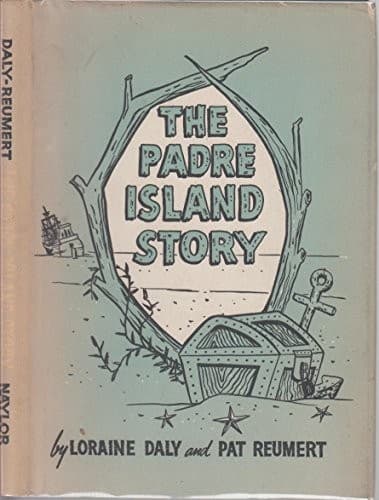
Padre Island (Tex.); Rio Grande Valley (Colo.-Mexico and Tex.) -- Description and travel
[Illustration: Palms make roads a majestic panorama]
[Illustration: (uncaptioned)]
_The Lusty Past of Lady Padre_
The ghostly etchings of past eras, traced in the mysterious sands of
Padre, are a lusty view for the hardiest. Here thrived humanity at its
most intense pitch. Adventure, somehow, often seeks islands in which to
ferment. Here were wars, savages dueling with royalty, romances of
Indian princesses, pirates’ revenge, blood-soaked buried treasures,
conquerors’ defeats, resting places of high-spirited explorers, refuges
for thieves, scoundrels, and for idealists. Their secrets nap beneath
the rhythmic shifting sands.
Padre intruded into history in the 1500’s, when one of the earliest
explorers, and certainly one of the earliest winter tourists, Alonso
Olvarez de Piñeda, set foot on its coast to open the door to the New
World. Next in the parade of travellers was Cabeza de Vaca, who stepped
ashore at the southern tip of the island. La Salle and De Soto also
briefly touched Padre, and even Cortez (and Drake, in later history)
explored the island on the way to conquest.
Fierce Indians were first masters of the island. Relics of their
primitive way of life have been retrieved and sent to museums throughout
the country. Chief among the Indians were the terrible Karankawas, a
cannibal tribe who ravaged the island at the turn of the nineteenth
century. Jarring against the soft setting of aquamarine seas, white
sands, and pink skies, they shot giant redfish with wildly decorated
bows and arrows. They sliced their brown bodies deep into the seas,
seeking food and, with glittering knives, often battling sharks. They
shouted blood-tingling chants to the accompaniment of shell drums,
flutes, and stone-filled gourds. To this pagan music, the painted and
feathered “Kronks” danced into the whirl of three day orgies.
The woeful tale of the “Flight of the Three Hundred,” to be dealt with
in detail in the following chapter, reveals the plight of satin-clad
cavaliers and ladies on Padre, who failed to conquer the challenge of
savages and sun. Among them was Doña Juana Ponce de León, whose beauty
caused men to search for the Fountain of Youth. Under the relentless
sun, these castaways fled from the cannibalistic Kronks into the sand
dunes of Padre, buying their lives by leaving their richly brocaded
garments behind them to delay and bribe their savage pursuers. One by
one they dropped, withered, into the white sands, brought down by fever,
hunger, thirst and arrows.
Public-domain text, read in full here on John Shaqi.
Reviews
Reviews
No reviews yet
Be the first to share your thoughts on this work.
Join the Discussion
Join the discussion
Sign in to leave a comment or review.
Sign InorCreate an account