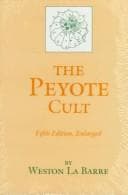
Indians of North America -- Religion; Indians of North America -- Rites and ceremonies; Peyotism
The parents of John Bearskin belonged to the medicine lodge and
he belonged to that organization until 1912. The mother of John
Bearskin became sick in 1905 and told him that she was near to
death. He was so distressed that he went to town and became
drunk. The next morning they wakened him and said that his
mother was dead. His father died in 1909. At that time he had
a little girl two years old and his sister had a little girl
five years of age. Both children died a week after his father’s
death. Bearskin’s father left him a farm with house, stock and
implements. He disposed of these, spent part of the proceeds
and with the remainder bought a house in Winnebago [Nebraska]
but later sold that and spent the money. He was drifting from
place to place and working as he had opportunity when a cousin
wrote him about peyote, advising him to return and use it. He
went back and on January 19, 1912, he and his two daughters
joined the peyote organization, being baptized by John Rave.
His wife joined later, during an illness. Since that time he
has not wavered in his attachment to the peyote cult, neither
has he gambled nor used liquor nor tobacco.
But there are skeptics who do not join. Michelson[16] quotes a Sauk
informant, who first belonged and later quit the cult:
I do not believe in it because it gives you the same effect
as whisky when you are drunk four or five days; only peyote
will affect you when you eat it once. I have eaten so there is
nothing in it. I quit five years ago. And another reason why I
do not believe in it is because the man did not know who the
manitou was who did the talking [in the Peyote origin legend];
because the men pitied by manitous, among us Sauks, knew who
they were, such as Wolf, Wisake, Turtle, or such as that.
An Oto informant was skeptical at first about the power of peyote, and
experimented with it: for two days he drank tea to test its virtues,
and then went to a meeting. There he was converted or “saved” when he
realized that he was “pitiful like a stick.”
Delos Lonewolf (Kiowa) quit peyote and became a preacher again, though
he had been an important peyote leader and one-time president of the
Oklahoma Native American Church; he had had “family troubles” and
was apparently persuaded thereto by his wife. Cecil Horse and Albert
Cat (Kiowa) have also recently quit peyote. When Kiowa Jim lost his
son, he gave his staff, gourd and feathers to Baptiste Derond (Oto),
a brother-in-law of Jonathan Koshiway. Derond was later killed in an
automobile accident. His younger brother Frank now has the paraphernalia,
but according to Koshiway, “they are afraid of them, and want to return
them,” since they are associated with misfortune.[17]
Public-domain text, read in full here on John Shaqi.
Reviews
Reviews
No reviews yet
Be the first to share your thoughts on this work.
Elsewhere in the archive
Join the Discussion
Join the discussion
Sign in to leave a comment or review.
Sign InorCreate an account