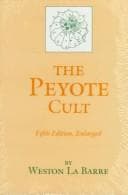
Indians of North America -- Religion; Indians of North America -- Rites and ceremonies; Peyotism
This etymology, the oldest as well as the most authoritative, is
accepted by Rouhier.[28] The present writer, having been informed of
its linguistic impeccability, further finds it explanatory of otherwise
curious extensions of the term “peyotl” in Hernandez,[29] as well as
later Mexican usages. Various plants in Mexico besides _Lophophora
williamsii_, some of them not even belonging to the Cactus Family, have
been called “peyote.” In each case, however, there has been some part
of the plant to which the meanings of flocculence or cocoon-like woolly
pubescence descriptively can legitimately apply. An appendix is devoted
to the clearing up of this terminological confusion.
IDENTIFICATION OF PEYOTE
We have now touched upon the etymological connotation of “peyotl,”
and its extended denotation in Mexican usage. But one further matter
remains to be pointed out, _viz._, incorrect identification and
misusages involving peyote. Safford[30] in 1915 adequately indicated the
identity of the modern peyote of the Plains with the peiotl of Sahagún
and other earlier Spanish writers. Not content, however, with proving
this somewhat obvious point, he went beyond and even contrary to his
evidence and attempted to prove the identity of peyote with a further
narcotic mentioned in Spanish sources, a yellow thin-stemmed mushroom,
called teo-nanacatl by the Aztec. This confusing and wholly erroneous
identification is discussed at length in an appendix, inasmuch as it has
unfortunately won wide acceptance.
A more widespread error is the application of the terms “mescal,” “mescal
bean” or “mescal button” to the cactus _Lophophora williamsii_ or peyote.
These misusages are common in the literature on peyote, and arise from
confusion with a pre-peyote narcotic of the southern Plains and Texas,
the red bean of _Sophora secundiflora_, a true member of the Bean
Family. The word “mescal” as applied either to the cactus or the bean
is erroneous and misleading, and should properly be applied only to the
“Indian cabbage” (_Agave_ spp.) of the Southwest, or the brandy distilled
from Agave-beer or pulque.[31] The true “mescal bean” is discussed
elsewhere.
PHYSIOLOGY OF PEYOTE INTOXICATION
The present section of our study proposes to deal with the physiology of
peyote intoxication only insofar as it may be supposed to have influenced
the form of native culture-patterns and rites surrounding its use. The
efficacy of native doctoring with peyote, however, must be decided on the
basis of properly controlled medical experiments, of a sort discussed in
Appendix 6, and is not at issue here.
Public-domain text, read in full here on John Shaqi.
Reviews
Reviews
No reviews yet
Be the first to share your thoughts on this work.
Join the Discussion
Join the discussion
Sign in to leave a comment or review.
Sign InorCreate an account