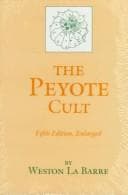
Indians of North America -- Religion; Indians of North America -- Rites and ceremonies; Peyotism
_Nervous system_: sizeable doses produce their most marked
effect on the nervous system: wakefulness (despite cardiac
and muscular depression), exaggeration of all reflexes (due
to selective action on the spinal cord). A frog injected with
pan-peyotl became “exceedingly susceptible to stimuli, until
even the slightest touch or even a breath of cold air is
sufficient to give rise to a little nervous explosion, with
the resulting contraction of several muscles”; the frog became
rigid in tetanus as the reflexes degenerated. Convulsions are
produced in the dog with ⅕ cc. of pan-peyotl, sometimes
light, sometimes as violent as those of strychnine; death in
convulsions with 1 cc. per kilogram of body weight. Pan-peyotl
immediately kills a rabbit with a dose of 2 cc. per kilogram
of body weight, injected intravenously; 2 cc. injected in the
lymphatic sac paralyzes a frog. An injected cat shows “ataxic
gait, with jerky and stiff movements”—a staccato effect in an
animal notable for the legato quality of its movements—with
“irregular twitchings of muscles over the whole body.” The
same effects, less marked because of relatively smaller doses,
appear in man as in other mammals. Extraordinary doses cause
qualitatively and quantitatively the same reactions: the writer
has seen a child, quite ill and suffering from malnutrition,
brought very fretful into a peyote meeting and fed peyote “tea”
until rigid in strychnine-like tetanic opisthotonos.
Public-domain text, read in full here on John Shaqi.
Reviews
Reviews
No reviews yet
Be the first to share your thoughts on this work.
Elsewhere in the archive
Join the Discussion
Join the discussion
Sign in to leave a comment or review.
Sign InorCreate an account