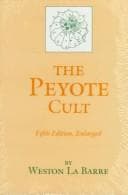
Indians of North America -- Religion; Indians of North America -- Rites and ceremonies; Peyotism
Bacon Rind [whose recent death is mentioned in the letter]
was one of the last of the old people who beli[e]ved in [the]
Wilson cult; these first followers of peyote are about all
gone. [The] small moon now prevales in the Osage. It will be
a blessing to the world when all the Quapaws and what few
Delawares [are left practicing it] will change [to the standard
peyote rite].
FOOTNOTES:
[1] Mooney, _The Ghost Dance_, 903-905.
[2] Capt. Hugh L. Scott, in Mooney, _The Ghost Dance_, 904.
[3] We have elsewhere expressed the opinion that the Caddo had an
historical significance in the spread of peyotism second only to that of
the Kiowa-Comanche, and that Wilson represents this Caddoan influence
predominantly. Though he had Delaware blood, this numerically small group
could scarcely have wielded the influence or exercised the prestige
necessary to account for the spread of his “moon;” the Caddo, on the
other hand, who early had peyote, did have this prestige. We therefore
believe Petrullo in error in claiming Wilson as a Delaware. Speck (_Notes
on the Life_, 540) writes that “His associations with the Comanche and
Caddo, to whom he was related by blood, were close.” Petrullo himself,
indeed (_The Diabolic Root_, 44) indicates Caddoan influences on Wilson:
“John Wilson, the originator of the Big Moon, was living among the Caddo.
He was one of the first Delaware to eat peyote. He belonged to the
Black Beaver band ... held by the Government at the Wichita and Caddo
reservations. It was there that Wilson was born and raised.” Petrullo
also says Wilson made visits to Arizona and New Mexico before returning
to make his moon on the Caddo reservation.
[4] Note the prominence of hearts in the altar elaborated by Wilson.
According to Petrullo (_The Diabolic Root_, 45) “John Wilson ... had
received some Catholic instruction.” These probably derive, therefore,
from the Catholic “Sacred Heart.” (The heart is present in Huichol
religion, but even if not wholly aboriginal [Aztecan influence?] and
Catholic-influenced there too, it is quite independent of the Wilson
heart motifs.)
[5] Cf. the prominence in Wilson’s moon of brushing each person entering
with feathers.
[6] Cf. the Winnebago leader’s similar praying with confessants in peyote
meetings.
[7] Speck, _Notes on the Life_, 540-42; cf. also Petrullo, _The Diabolic
Root_, 80.
[8] “In response to the question as to whether Wilson ever spoke of the
Peyote songs as symbolizing the singing of birds, Anderson asserted that
he had heard of this among other Peyote sects but had never heard Wilson
express it.” (Speck, _op. cit._, 542 note.)
Public-domain text, read in full here on John Shaqi.
Reviews
Reviews
No reviews yet
Be the first to share your thoughts on this work.
Elsewhere in the archive
Join the Discussion
Join the discussion
Sign in to leave a comment or review.
Sign InorCreate an account