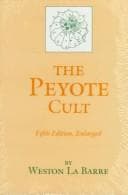
Indians of North America -- Religion; Indians of North America -- Rites and ceremonies; Peyotism
Of course apologists sometimes use Christian arguments to confound the
enemies of the cult, as when peyote and the water are equated to the
Catholic use of bread and wine in Communion,[14] or when Old Man Green
(Oto) told a minister that he was condemning God’s work in attacking
peyote. But these do not proceed from any profound faith in Christianity.
A Shawnee comment is most typical:
Christ was born only several hundred years ago, not when the
world was created, like peyote.
Prayers are still addressed to the older tribal deities in peyote
meetings: the Winnebago to Earthmaker, the Oto to Wakan, the Cheyenne to
Mayan, etc. A Kickapoo summed up the religious history of his tribe as
follows:
We had medicine bags before Jesus was born over in Bethlehem,
in the old country. The old generation worshipped idols. When
God’s son was going to be born, they were trying to make the
people believe God. And after Jesus was born, they commenced
this [peyote].
Nevertheless, it should be reiterated that on the whole, despite the
apparent and superficial syncretism with Christianity, peyotism is
an essentially aboriginal American religion, operating in terms of
fundamental Indian concepts about powers, visions and native modes of
doctoring. The Christianity of many native Christians is precarious at
best—as we have seen from various case histories—when it comes into any
very serious conflict with native culture. Perhaps most peyote-users
would echo the words of the famous Comanche chief, Quanah Parker, with
reference to the superiority of peyotism over Christianity:
The white man [he said] goes into his church house and talks
_about_ Jesus, but the Indian goes into his tipi and talks _to_
Jesus.[15]
FOOTNOTES:
[1] “[De la Serna] adds that ... they delighted in caricaturing the
Eucharist, dividing among their congregation a narcotic yellow mushroom
for the bread, and the inebriating pulque for the wine. Sometimes they
adroitly concealed in the pyx, alongside the holy water, some little
idol of their own, so that they really followed their own superstitions
while seemingly adoring the Host. They assigned a purely pagan sense to
the sacred formula, ‘Father, Son, and Holy Ghost,’ understanding it to
be, ‘Fire, Earth, and Water,’ or the like” (Brinton, _Nagualism_, 28);
Bennett and Zingg, _The Tarahumara_, 369, 385. _Coix Lachryma Jobi_ was
an early Spanish introduction, but may have replaced some native seed
(e.g., mescal) used as beads. Serna’s mushroom is probably teo-nanacatl.
[2] Klineberg, _Notes on the Huichol_, 449; Lumholtz, _Unknown Mexico_,
1:314; 2:170, 189.
[3] Lumholtz, _op. cit._, 2:171-72, 272; Bennett and Zingg, _The
Tarahumara_, 294.
[4] Bennett and Zingg, _op. cit._, 290; Lumholtz, _Unknown Mexico_,
1:360-61. On Tarahumari Christianity see _Handbook of the American
Indians_, 2:692b; the ease of acceptance suggests congruence with
aboriginal forms.
Public-domain text, read in full here on John Shaqi.
Reviews
Reviews
No reviews yet
Be the first to share your thoughts on this work.
Elsewhere in the archive
Join the Discussion
Join the discussion
Sign in to leave a comment or review.
Sign InorCreate an account