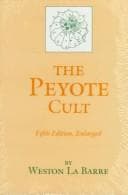
Indians of North America -- Religion; Indians of North America -- Rites and ceremonies; Peyotism
Peyote is also a powerful protection against witchcraft in ritual
foot-races. Rivals are liable to throw bones and herbs on the track and
cause the Tarahumari runner to be bewitched and lose the race, which is
run at night. For this contingency, however, “hikuli and the dried head
of an eagle or a crow may be worn under the girdle as a protection.”[15]
Peyote is a great protection too when traveling, both in war and on
peyote-pilgrimages.[16]
The Comanche commonly wore peyotes in buckskin bags attached to beaded
bandoliers, recalling the mescal bean bandolier which the Kiowa and
others commonly wore in battle. Indeed, peyote was even a part of the
Θawikila and Kispoko war bundles of the Shawnee, long before they knew
the generalized peyote ritual—a custom similar to the Iowa use of mescal
beans in their war bundles.[17]
But in Mexico and the Southwest war and witching are closely connected
ideologically. As a matter of fact, peyote itself as well as the peyote
shaman’s rasp, is employed in Tarahumari witchcraft.[18] Among the
Mescalero Apache,[19] however, witching _within_ the tribe by rival
peyote shamans was an ever-present anxiety, their feuds being conceived
in terms of battles and war, with the “shooting” of arrows and struggles
to see who had the more powerful and compelling songs. The Mescalero
peyote leader was merely a shaman _primus inter pares_, whose major
function was to prevent witching in meetings. The purpose of the Tonkawa
peyote songs, it is said, was to ward off the enemies’ witching. Witching
with peyote is less in evidence in the Plains, save among the Kiowa,
Comanche, and Cheyenne who early received it, but as late as the time
when the Caddo-Delaware messiah John Wilson took peyote and the Ghost
Dance to the Quapaw there was witching by “shooting” objects. The
Northern Cheyenne feared the “trickiness” of peyote itself; and the Lipan
fireman was chosen for his braveness because “he has to go out at night
to get wood and it is a frightening job sometimes, especially when one is
under the influence of peyote; peyote is sure a joker!”
Besides this fetishistic use in war, peyote was also used somewhat more
“technologically” to cure wounds. Alegre writes that the Sonoran
manner of curing the wounds is with peyote, that they call
peyori after it has been made into a powder, with which they
fill the cut, cleaning it and renewing it three times every two
days, or with a species of balm composed of [maguey].
Prieto says that, in Tamaulipecan war, among the provisions carried by
the women in the rear were
gourds full of peyote and water ... and in addition to all
these provisions they carry some plants, which, chosen and
prepared beforehand serve to stop hemorrhages from the wounds,
and to aid in their curing.
The Opata used pejori for arrow-wounds, cleaning them out with cotton
squills on sticks dipped in the powder; the Lipan put peyote on wounds of
all kinds.[20]
Public-domain text, read in full here on John Shaqi.
Reviews
Reviews
No reviews yet
Be the first to share your thoughts on this work.
Join the Discussion
Join the discussion
Sign in to leave a comment or review.
Sign InorCreate an account