Indians of North America -- Religion; Indians of North America -- Rites and ceremonies; Peyotism
APPENDIX 9: The Native American Church and Other Peyote Churches 167
BIBLIOGRAPHY 175
ILLUSTRATIONS
PLATES
Explanation of plates AT END
1. Peyote leaders
2. Altar and ash birds
TEXT FIGURES
PAGE
1. Arrangement of tipi for peyote meeting (Kiowa) 44
2. Peyote paraphernalia 47
3. Peyote drum 49
4. Peyote altars or moons 75
5. The diffusion of peyotism 122
6. Cement altar of the Big Moon rite (Osage) 154
7. Altar in West Moon Church (Osage) 155
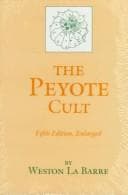
THE PEYOTE CULT
INTRODUCTION
Peyote (Nahuatl, peyotl) or _Lophophora williamsii_ Lemaire, is a small,
spineless, carrot-shaped cactus growing in the Rio Grande Valley and
southward. It contains nine narcotic alkaloids of the isoquiniline
series, some of them strychnine-like in physiological action, the rest
morphine-like. In pre-Columbian times the Aztec, Huichol, and other
Mexican Indians ate the plant ceremonially either in the dried or green
state. This produces profound sensory and psychic derangements lasting
twenty-four hours, a property which led the natives to value and use it
religiously. Peyote is not, however, the same as teo-nanacatl, as Safford
believed; the latter is a narcotic mushroom which likewise had a Mexican
distribution. The term “peyotl” is also used in Mexico to designate other
cacti and non-cacti, some of which, like peyote, are reputed to have
aphrodisiac and other properties.
Physiologically, the salient characteristic of peyote is its production
of visual hallucinations or color visions, as well as kinaesthetic,
olfactory and auditory derangements. Psychiatrists have used it
(experimentally) with unsatisfactory results in producing temporary
psychosis, and therapeutically its use has been similarly disappointing
because of the uncertainty of action of the antagonistic alkaloids of
pan-peyotl. First, exhilaration is produced by the strychnine-like
alkaloids, followed by profound depression, nausea and wakefulness, and
finally, under the influence of the morphine-like alkaloids, brilliant
color visions are produced, which last for several hours. There are no
ill after-effects, and peyote is not known to be habit-forming. These
properties have led to a number of non-ritual uses by natives for
prophesying, clairvoyance, finding lost objects and the like, as well as
empirically for the cure of all manner of illnesses.
Public-domain text, read in full here on John Shaqi.
Reviews
Reviews
No reviews yet
Be the first to share your thoughts on this work.
Join the Discussion
Join the discussion
Sign in to leave a comment or review.
Sign InorCreate an account