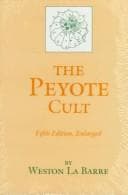
Indians of North America -- Religion; Indians of North America -- Rites and ceremonies; Peyotism
[66] Bennett and Zingg, _The Tarahumara_, 138, 295; Lumholtz, _Unknown
Mexico_, 1:357-58 (wherein all but the last named are cacti), 2:124-25
(Tepecano). The accepted etymology of teo-nanacatl, “divine mushroom,”
suggests the same attitude; in the Antilles “among the most prominent
of the plants worshipped ... [are] mushrooms, pines, opuntias, zapos,
and zeybas.” (Rafinesque, cited in Bourke, _Scatological Rites_, 91; but
Rafinesque is an undependable authority). The Cherokee called casine
yapon (the “black drink”) “the beloved tree” (Bartram, _Travels_, 357).
It is also said that in Virginia toadstools were an object of worship
because of their mysterious growth (Bourke, _ibid._). In Peru coca was
looked on with veneration and suppliants must approach priests only with
some in their mouths. Compare the use and attitudes toward tobacco,
mescal beans, datura, guarana paste, cohoba, chocolate (_Theobroma
cacao_), aya-huasca, yahé, etc.
[67] Lumholtz, _Unknown Mexico_, 2:172-73, 207, 263 ff. The Huichol had
hikuli-shields; curiously, Crow-Neck (Kiowa) about 1860 made a peyote
shield according to a vision he had at Mescalero, but he threw it away
when he was captured on his first fight in Mexico. The Kiowa, however,
had heraldic shield-societies before peyote, of which this is probably
an aberrant example. (For the bird and arrow equation see Spier, _Yuman
Tribes_, 331, Lumholtz, _op. cit._, 2:201-202.) See also Lumholtz, _op.
cit._, 1:313, 323-24, 371-72; _Tarahumari Dances_, 452.
[68] Bennett and Zingg, _The Tarahumari_, 294.
[69] Lumholtz, _Unknown Mexico_, 1:311, writes: “Without his shaman the
Tarahumare would feel lost, both in this life and after death. The shaman
is his priest and physician. He performs all the ceremonies and conducts
all the dances and feasts by which the gods are propitiated and evil is
averted, doing all the singing, praying, and sacrificing. By this means,
and by instructing the people what to do to make it rain, and secure
other benefits, he maintains good terms for them with their deities, who
are jealous of man and bear him ill-will. He is also on the alert to
keep those under his care from sorcery, illness, and other evil that may
befall them ... the Tarahumare ... keeps his doctor busy curing him, not
only to make his body strong to resist illness, but chiefly to ward off
sorcery, the main source of trouble in the Indian’s life.”
[70] Beals, _Comparative Ethnology_, 128.
[71] This entire section is summarized from data collected by M. E.
Opler. I gratefully acknowledge the courtesy and generosity of his
lending me the article _The Influence of Aboriginal Pattern_ before
publication, as well as _The Autobiography of a Chiricahua Apache_,
and unpublished notes on Lipan, Tonkawa and Carrizo peyotism; it would
be difficult to establish Mexican-Plains continuities without these
invaluable data and the warm coöperation of Dr. Opler.
Public-domain text, read in full here on John Shaqi.
Reviews
Reviews
No reviews yet
Be the first to share your thoughts on this work.
Elsewhere in the archive
Join the Discussion
Join the discussion
Sign in to leave a comment or review.
Sign InorCreate an account