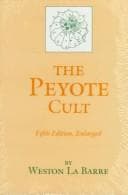
Indians of North America -- Religion; Indians of North America -- Rites and ceremonies; Peyotism
_Place of Meeting._ The typical place of meeting for the Plains, as well
as Taos, Mescalero, and Lipan, is the tipi. The Arapaho-Winnebago peyote
tipi has twelve poles, symbolizing the earth.[25] The Pawnee have special
painted tipis for peyote, as in the Ghost Dance; and, like the Pawnee,
the Wichita and Winnebago dismantle the tipi immediately at the end of a
meeting.[26] The Osage, Quapaw, Omaha, Northern Winnebago and others[27]
have special peyote churches, or “round houses” (really polygonal), and
many, like the Taos, hold winter meetings in the home of some member.
But meetings were held elsewhere too in the past. The Carrizo had
meetings in the open within a circle of sticks. The first Kiowa meetings
took place within a circle of upright poles with canvas stretched around
it, open to the sky; Comanche also used simple wind-breaks as do even now
the Northern Cheyenne, who sometimes also hold the ceremony on a hill-top
in the open.[28] The Caddo have held meetings in a canvas-covered
subconical “stick house” holding over forty people in two rows; and
the Bannock of Idaho, on account of opposition to peyotism, have held
meetings in backwoods log-houses—in short, the holding of the meeting in
a tipi, while common and typical, is not ritually required.
_Bathing._ The Lipan customarily washed their hair in yucca suds before
a meeting, and perfumed themselves with mint. In the Plains and at
Mescalero they take a sweatbath or a bath with water; the Arapaho[29]
plunge once against the current and once with it, then rub themselves
with teaxuwineⁿ or waxuwahan and other scented plants. The Osage build a
sweat lodge as an integral part of their church, in a direct line east of
it. A man in Hominy specializes in giving Osage old-style sweat baths,
but some of them somewhat ostentatiously travel to Claremore, a hundred
miles away, to take “radium baths” before meetings.
_Painting._ Face and body painting is recorded for the Arapaho, Comanche,
Delaware, Kiowa, Oto, Shawnee, Tonkawa, Wichita and Winnebago, yellow
being the commonest color used by the Arapaho and Comanche.[30] A Kiowa
story tells of the acquiring of an individual paint design in a vision
of a red bird which turned into a man. The Tonkawa even painted the fuzz
on the top of the fetish peyote red, according to Opler. Painted stripes
symbolize for the Wichita the extent of one’s experience with peyote: a
beginner paints the part of the hair yellow and puts one blue line on his
face, adding up to four finally: “He’s supposed to know something then.”
Both men and women painted for Winnebago meetings.[31]
Public-domain text, read in full here on John Shaqi.
Reviews
Reviews
No reviews yet
Be the first to share your thoughts on this work.
Elsewhere in the archive
Join the Discussion
Join the discussion
Sign in to leave a comment or review.
Sign InorCreate an account