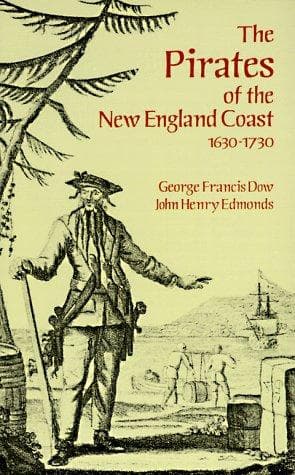
The pirates of the New England coast, 1630-1730Dow, George Francis
History
The pirates of the New England coast, 1630-1730
Dow, George Francis
New England -- History -- Colonial period, ca. 1600-1775; Pirates -- New England -- History
When James I (1603-1625) came to the throne he resolved to live at
peace with all nations and so found little employment for a navy.
In the first year of his reign he recalled all “letters of marque,”
and two years later, by proclamation, forbade English seamen to seek
employment in foreign ships. In consequence many poverty-stricken
seamen became pirates, urged on by their necessities. “Some, because
they became sleighted of those for whom they had got much wealth; some,
for that they could not get their due; some, that had lived bravely,
would not abase themselves to poverty; some vainly, only to get a
name; others for revenge, covetousnesse, or as ill; and as they found
themselves more and more oppressed, their passions increasing with
discontent, made them turne Pirats.”[3]
By 1618, there were ten times as many pirates as there had been during
the whole reign of Queen Bess. About the only voyage open to an English
seaman at that time was the fishing venture of Newfoundland, which
was toilsome in the extreme and full of exposure and hardship. The
dirty carrying trade to Newcastle, for coals, while a good school for
seamen, was despised and thought beneath the ability of an active man,
and the long voyage to the East Indies was tedious and dangerous. As
for the navy--berths were few and the food poor, the pay was small
and the service a kind of slavery. Ordinary seamen received only ten
shillings a month, which was raised to fifteen shillings when Charles
I (1625-1649) became king. But even this small wage was subject to a
deduction of six pence for the Chatham Chest founded in 1590 for the
relief of injured and disabled seamen.
Peter Easton was one of the most notorious of the English pirates
during the reign of James I. In 1611 he had forty vessels under his
command. The next year he was on the Newfoundland coast with ten of
his ships where he trimmed and repaired, appropriated provisions and
munitions and took one hundred men to man his fleet.[4] On June 4,
1614, Henry Mainwaring, was at Newfoundland, with eight vessels in his
fleet. Mainwaring became even better known than Easton and a few years
later was pardoned and placed in command of a squadron and sent to
the Barbary coast in an unsuccessful attempt to drive out the pirates
located there. While he was on the Newfoundland coast he plundered the
fishing fleet of carpenters and marines and the provisions and stores
that he needed. Of every six seamen he took one. From a Portuguese
ship he looted a good store of wine and a French ship supplied him
with 10,000 fish. Some of the fishermen deserted their vessels and
voluntarily went with him. In all he took four hundred men, many of
whom were “perforstmen,”[5] and then sailed back across the Atlantic
to continue his impartial plundering of the ships of Spain and other
nations.
Public-domain text, read in full here on John Shaqi.
Reviews
Reviews
No reviews yet
Be the first to share your thoughts on this work.
Join the Discussion
Join the discussion
Sign in to leave a comment or review.
Sign InorCreate an account