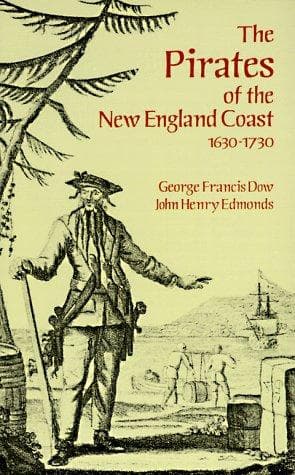
The pirates of the New England coast, 1630-1730 — John Shaqi
The pirates of the New England coast, 1630-1730Dow, George Francis
History
The pirates of the New England coast, 1630-1730
Dow, George Francis
New England -- History -- Colonial period, ca. 1600-1775; Pirates -- New England -- History
It was an easy matter for the English pirates to obtain bread, wine,
cider and fish and all the necessaries for shipping on the Newfoundland
coast as the fishermen were unarmed and moreover did not stand
together. Not many pirates went there, however, as the voyage across
the Atlantic was long and the prevailing winds apt to be westerly or
northwesterly during the summer months. Notwithstanding, the fishing
fleets suffered so much from these attacks that by 1622, men-of-war
were sent out to convoy and remain on the station during the fishing
season. In 1636, three hundred English fishing vessels were in the
fleet that sailed for home under convoy.
The Irish coast was another favorite resort where pirates went to
careen and obtain provisions from the country people. Broadhaven was
a favorite rendezvous. The Irish coast not only was a good place to
provision but also there “they had good store of English, Scottish and
Irish wenches which resort unto them, and these are strong attractions
to draw the common sort of them thither.”[6]
Mainwaring in his account of English piracy at this period, supplies an
interesting description of their methods of attack.
“In their working they usually do thus: a little before day they take
in all their sails, and lie a-hull, till they can make what ships are
about them; and accordingly direct their course so as they may seem
to such ships as they see to be Merchantmen bound upon their course.
If they be a fleet, then they disperse themselves a little before
day, some league or thereabouts asunder, and seeing no ships do most
commonly clap close by a wind to seem as Plyers.[7] If any ships stand
in after them, they heave out all the sail they can make, and hang out
drags to hinder their going, so that the other that stand with them
might imagine they were afraid and that they shall fetch them up. They
keep their tops continually manned, and have signs to each other when
to chase, when to give over, where to meet, and how to know each other,
if they see each other afar off.
“In chase they seldom use any ordnance, but desire as soon as they can,
to come a board and board; by which course he shall more dishearten
the Merchant and spare his own Men. They commonly show such colours as
are most proper to their ships, which are for the most part Flemish
bottoms, if they can get them, in regard that generally they go well,
are roomy ships, floaty[8] and of small charge.”
Mainwaring also comments on the ease with which successful pirates
might obtain a pardon and of this he spoke with personal knowledge of
how it was done, writing, “if they can get £1000 or two, they doubt
not but to find friends to get their Pardons for them. They have also
a conceit that there must needs be wars with Spain within a few years,
and then they think they shall have a general Pardon.”
Public-domain text, read in full here on John Shaqi.
Reviews
Reviews
No reviews yet
Be the first to share your thoughts on this work.
Join the Discussion
Join the discussion
Sign in to leave a comment or review.
Sign InorCreate an account