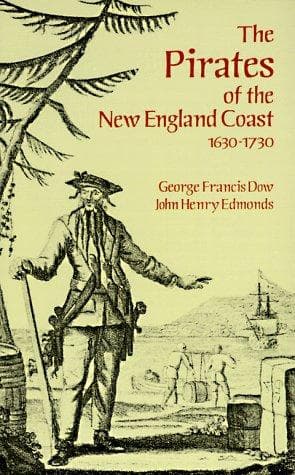
The pirates of the New England coast, 1630-1730Dow, George Francis
History
The pirates of the New England coast, 1630-1730
Dow, George Francis
New England -- History -- Colonial period, ca. 1600-1775; Pirates -- New England -- History
By the year 1630, small settlements had been established by the
English on the islands of Bermuda, St. Christopher, Tortuga and the
Barbadoes, and Frenchmen were on Hispaniola; but before many years St.
Christopher and Tortuga were ravaged by Spanish fleets, the women and
children murdered and all able-bodied men condemned to slavery in the
mines. The limitations of English navigation laws at this time were
crowding the home ports with unemployed seamen; some took to begging on
the high roads, but the more adventurous found their way to the West
Indies where twice each year journeyed the fleet of great ships laden
with gold and silver from the mines of Mexico and Peru, pearls from
Margarita and precious gems gathered from two continents. Here, too,
came the scum of Europe and on the island of Tortuga a settlement grew
that was frequented by lawless vagabonds coming from everywhere who
lived variously by hunting, planting and piracy.
The name “buccaneer,” afterwards applied to these rovers, was derived
from the hunters who smoked the flesh of the wild cattle that they
killed, over a “boucane” or wood fire. Two centuries and a half later,
the French half-breeds canoeing in the Canadian backlands spoke of “la
boucane” when they lighted their camp fires. The hunters went to the
mainland in large parties and killed the wild cattle for their hides.
“After the hunt was over” writes Esquemeling,[13] the historian of the
buccaneers, “they commonly sail to Tortuga to provide themselves with
guns, powder and shot, and necessaries for another expedition; the
rest of their gains they spend prodigally, giving themselves to all
manner of vice and debauchery, particularly to drunkenness, which they
practiced mostly with brandy.” The tavern keepers and the hangers-on
of both sexes, watched for the return of the buccaneers, “even as at
Amsterdam, they do for the arrival of the East India fleet.”
It was a Frenchman, known among his associates as “Peter the Great,”
who first played the uproarious game of piracy on the Spanish fleet.
With only twenty-eight men he cruised off the coast of Hispaniola in
an open boat at the time of year when the galleons passed on their
homeward voyage. On sighting the fleet he followed during the night
and notwithstanding the fact that the Vice-Admiral had been told of
the suspicious craft, so confident was he of the strength of his ship
that she was allowed to straggle from the convoy. When the boatload
of desperadoes ran alongside they scuttled their craft and boarded
the Spaniard yelling like demons. They were dressed in their usual
manner, in shirts soaked in the blood of wild cattle, leather breeches
and moccasins of rawhide, and the Vice-Admiral, sitting in his cabin
playing cards, may well have imagined, as in fact he cried out--“The
ship is invaded by devils.”
Public-domain text, read in full here on John Shaqi.
Reviews
Reviews
No reviews yet
Be the first to share your thoughts on this work.
Join the Discussion
Join the discussion
Sign in to leave a comment or review.
Sign InorCreate an account