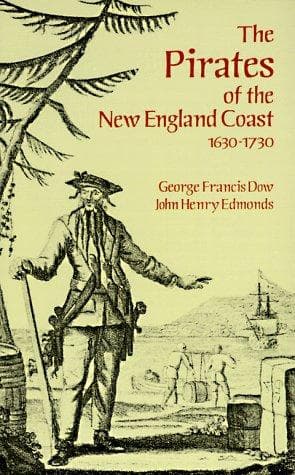
The pirates of the New England coast, 1630-1730Dow, George Francis
History
The pirates of the New England coast, 1630-1730
Dow, George Francis
New England -- History -- Colonial period, ca. 1600-1775; Pirates -- New England -- History
There is an old saying that “Peace makes pirates.” The lawless
scamps--“sweepings of Hell and Hackney”--who manned the privateers were
especially prone to go a-pirateering in times of peace. They could
not or would not settle down to steady work and small pay or be bound
by laws and conventions. They loved roving and loot too well. Better
to hang a sun-drying than to live with “a southerly wind in the shot
locker.” It was but a step, after all, and that a short one, if half
be true that has been written of privateers by men of regular navies.
But perhaps they were a little prejudiced. Many rich prizes were taken
by the private ships of war, often robbing the regulars of the chance
of filling their pockets. Those who manned the King’s ships, like all
others that used the seas, suffered from loot hunger and to satisfy
the same would often sail very close to the wind, so close, in fact,
that several of the King’s captains were caught flat aback and made a
stern board towards the rocks. Some cleared by discharging their golden
ballast, others, by the wind of influence.
Coasters and fishermen were not so apt to turn pirates. Their work was
hard and risky; but fresh food, “full and plenty,” and shore influence
kept them steady. They were not as a rule of such an adventurous type
as deep-water seamen. Occasionally, however, some lusty young fisherman
or coaster would go a-roving. Perhaps some maid had been unkind or too
kind.
Some sailed under the “Jolly Roger” because they thought that he
who dared, toiled and ventured, deserved as great a percentage of
the profits as he who sat at home in personal safety and comfort
and handled the pen. It was their only chance of getting even with
the merchants and that chance a good one. Governments had little to
spend on pirate chasing; besides, who could better stand a little
cash-letting than the money-fat merchants. But well as they might
have been able to stand it they roared so during the operation that
governments were forced at last, Acts of Grace having failed, to
send men-of-war to cruise against “the gentlemen of fortune following
the sea.” They effected little. After one pirate-hunting squadron had
returned unsuccessful, sailors’ yarns floated around that told of the
commodore’s ship springing a leak out Madagascar way, and of great
store of powder, shot and rum being landed to lighten her. The leak
stopped as suddenly as it began and when the boats’ crews landed to
bring off the powder, shot and rum, all had disappeared. The yarns went
on to tell that when the commodore was taking a walk on shore, he found
several small kegs stowed under a palm tree down by the water’s edge,
and how heavy they were, and how carefully they were kept in the after
cabin of the Commodore’s ship, and that the officers said they had
nothing in ’em but honey; but Barney Brown, the boatswain’s mate, swore
his Bible oath that he heard the clink of coin when a-rolling them
along the deck.
Public-domain text, read in full here on John Shaqi.
Reviews
Reviews
No reviews yet
Be the first to share your thoughts on this work.
Join the Discussion
Join the discussion
Sign in to leave a comment or review.
Sign InorCreate an account