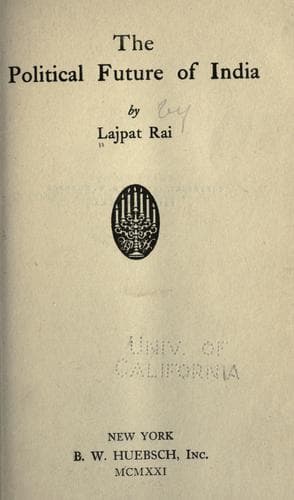
India -- History -- British occupation, 1765-1947; India -- Politics and government -- 1765-1947
"Famine connotes not so much a scarcity or entire absence of food as
high prices and a lack of employment in the affected areas.... The
capital in the hands of the country traders has proved insufficient to
finance the ordinary movements of crops and the seasonal calls for
accommodations from the main financial centers are constantly
increasing. This lack of available capital is one cause of the high
rates that the ryot has to pay for the ready money which he needs to buy
seed and to meet the expenses of cultivation. On the other hand, money
is largely invested in the purchase of landed property, the price of
which has risen to very high figures in many parts of the country....
But the no less urgent necessity of relieving the ryot from the enormous
load of debt with which he has been burdened by the dearness of
agricultural capital, the necessity of meeting periodic demands for rent
and his social habits, has hitherto been met only to a very small extent
by co-operative organization. The farmer, owing partly to poverty and
partly to the extreme sub-division of the land, is very often a producer
on so small a scale that it is practically impossible for him to take
his crops to the larger markets where he can sell at current rates to
the agents of the bigger firms.... A better market system, co-operative
selling, and education are the promising remedies."
Coming to the industrial centers of the country apart from the rural
areas, the report says:
"A characteristic feature of organised industry and commerce in all the
chief Indian centers is the presence of large agency firms which, except
in the case of Bombay, are mainly European. In addition to participating
in the export and import trade, they finance and manage industrial
ventures all over the country, and often have several branches in the
large towns. The importance of these agency houses may be gauged by the
fact that they are in control of the majority of the cotton, jute and
other mills as well as of the tea gardens and the coal mines."
The general remarks about the industrial deficiency of the country will
be better understood from the following extracts:
Public-domain text, read in full here on John Shaqi.
Reviews
Reviews
No reviews yet
Be the first to share your thoughts on this work.
Elsewhere in the archive
Join the Discussion
Join the discussion
Sign in to leave a comment or review.
Sign InorCreate an account