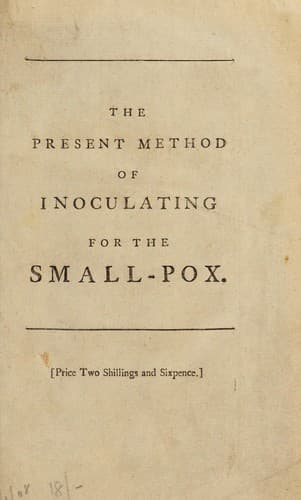
The Present Method of Inoculating for the Small-Pox: To which are added, some experiments, instituted with a view to discover the effects of a similar treatment in the natural small-poxDimsdale, Thomas
History
The Present Method of Inoculating for the Small-Pox: To which are added, some experiments, instituted with a view to discover the effects of a similar treatment in the natural small-pox
Dimsdale, Thomas
Smallpox -- Vaccination -- Early works to 1800
In the preceding pages I have described the usual progress of the
small-pox from the inoculation. There are, however, deviations from
this course, and indeed not a few; some of the most material of which,
as they may embarrass the inexperienced, and create a real difficulty,
as well as apprehensions of danger, it seems necessary to describe, and
to point out the means that experience has suggested to remove these
symptoms, or the doubts respecting the event.
The first I shall take notice of, and which, though it very rarely
happens, sometimes gives much trouble, is great sickness, accompanied
with vomiting, coming on during the eruptive state of the distemper.
For this complaint it is always necessary in the first place to clear
the stomach; which may be effected, either by ordering the patient to
drink plentifully of warm liquids to promote vomiting; or, perhaps more
properly, by given one grain of emetic tartar to an adult, mixed with
ten grains of compound powder of crabs claws; taking care to lessen the
dose for very young and weak subjects.
This usually throws off some bilious matter by vomit, sometimes
procures stools, or occasions a moderate sweat, and generally
administers relief. If, however, no stools should follow from this
medicine, and the sickness should remain, a gentle laxative almost
certainly procures a respite, and the appearance of the eruption
removes the complaint intirely.
Another deviation, of still more consequence, which sometimes happens
towards the time of the eruption, and is often, though not always,
accompanied with great sickness, is an erysipelatous efflorescence.
This, if it shews itself on the skin partially, and here and there in
patches, is not very alarming, and soon wears off.
But sometimes the whole surface of the skin is covered with a rash
intimately mixed with the variolous eruption, and so much resembling
the most malignant kind of confluent small-pox, as scarcely to be
distinguished from it: and indeed some cases of this sort have
happened, where, being accompanied with petechiæ and livid spots, I
have been much alarmed; not being able, by inspection only, though
assisted by glasses, to determine whether what I saw was an inoffensive
rash, or tokens of the greatest malignity. Very strict attention,
however, has enabled me to distinguish the difference clearly; and the
following observations will, I hope, tend to relieve others from the
anxiety they would feel upon such an appearance.
Public-domain text, read in full here on John Shaqi.
Reviews
Reviews
No reviews yet
Be the first to share your thoughts on this work.
Join the Discussion
Join the discussion
Sign in to leave a comment or review.
Sign InorCreate an account