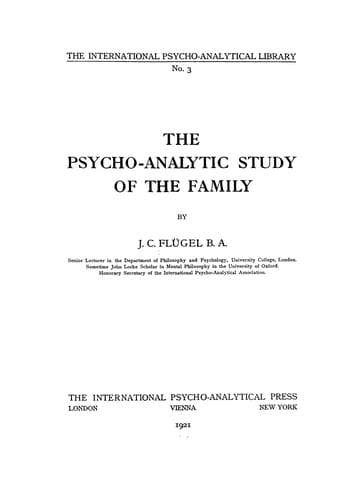
The psycho-analytic study of the familyFlugel, J. C. (John Carl)
Science
The psycho-analytic study of the family
Flugel, J. C. (John Carl)
Families; Marriage; Parent and child; Psychoanalysis
The treatment of these non-sexual aspects is of special difficulty for
two reasons. In the first place, these aspects are, in their actual
occurrence, intimately bound up with the processes of sexual development
with which we have been dealing; and are often difficult to disentangle
from them. In the second place, this very question of the distinction
of the sexual from the non-sexual aspects of the observed facts of
development has recently been, and still is, a subject of keen dispute
among certain members of the psycho-analytic and post-psycho-analytic
schools. The authors who have dealt more especially with the non-sexual
aspects have written largely under the influence of this dispute and from
a somewhat different point of view from that of the writers who have
laid the principal emphasis upon the sexual side. Hence a comparison of
the chief contributions on the two aspects is not always easy. In spite
of these difficulties, however, certain conclusions stand out with some
degree of clearness from the mists of controversy, and these are of
considerable importance for our present purpose.
[Sidenote: The work of Jung]
In the course of his pioneer work, Freud himself had in more than one
connection drawn attention to the importance of the family relationships
in regard to the general development of character and vital activity of
the individual. It is however more especially to C. G. Jung of Zürich that
we are indebted for a more explicit, vigorous and extended treatment of
the problems of the family from this point of view[21]. The more recent
work of Jung is marred by an exaggerated insistence on a single aspect,
and by a tendency to mysticism which is apt to confuse and obscure the
scientific consideration of the problem. But in spite of these defects
it undoubtedly contains many contributions of value and, especially when
taken as complementary to, rather than opposed to, the work of Freud,
Rank and others of the orthodox psycho-analytic school, it would seem to
constitute in some ways an important step forward in our knowledge of the
matters with which we are here concerned.
Public-domain text, read in full here on John Shaqi.
Reviews
Reviews
No reviews yet
Be the first to share your thoughts on this work.
Join the Discussion
Join the discussion
Sign in to leave a comment or review.
Sign InorCreate an account