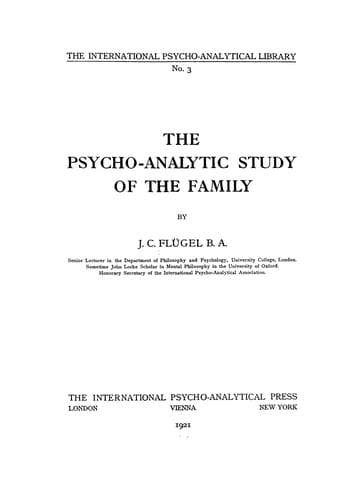
The psycho-analytic study of the family — John Shaqi
The psycho-analytic study of the familyFlugel, J. C. (John Carl)
Science
The psycho-analytic study of the family
Flugel, J. C. (John Carl)
Families; Marriage; Parent and child; Psychoanalysis
(3) Even if we are prepared to grant that this repression may have arisen
from some other cause, it still remains difficult to account for the fact
that the desire to return to infantile conditions should persistently
avail itself of such an objectionable symbolic form. We should expect
that the path of least resistance would lead to some means of symbolic
expression calculated to arouse less opposition on the part of conflicting
tendencies than that to which the idea of incestuous relationship is
exposed. This leads to a fourth and still more serious objection on
general grounds.
[Sidenote: It is not in harmony with the general laws of symbolism]
(4) Jung's view seems incompatible with all we know as to the general
relations of Repression and Displacement to conscious and unconscious
factors respectively. The general rule, which is exemplified in
innumerable dreams, myths, neurotic symptoms and cases of "everday
psychopathology" would appear to be that the symbol expresses some
tendency or desire in the unconscious which is more opposed to conscious
tendencies and desires than is the symbol itself[22]. But in the present
case, if Jung's view were correct, this rule would no longer hold. The
desire for incestuous relations with one's parents is obviously exposed to
much more serious inhibitions at the conscious level than is the desire
to escape from the labours and responsibilities of adult life. The latter
desire, although it may of course become the object of moral disapproval
is generally of a nature to be freely admitted to consciousness. The idea
of our own laziness or want of courage in meeting the difficulties of
life can be faced by most of us (including the class of neurotics who,
according to Jung's hypothesis, must, it would seem, have fallen ill owing
to the repression of the desires connected with these ideas) without
arousing any overwhelming sense of moral turpitude; whereas the idea of
incest, even in the case of others, meets with the greatest abhorrence,
and in relation to ourselves usually encounters sufficient opposition
to be kept out of waking consciousness altogether. It would therefore
seem that, on Jung's view, it is the conscious which is symbolised at
a relatively unconscious level--a complete reversal of the usual order
which, on the ground of the psycho-analytic knowledge already gained, must
be regarded as highly improbable, at any rate in so far as it is to be
looked upon as a full explanation of the phenomena under discussion.
[Sidenote: Such a view cannot afford a complete explanation though it may
contain certain valuable elements of truth]
Public-domain text, read in full here on John Shaqi.
Reviews
Reviews
No reviews yet
Be the first to share your thoughts on this work.
Join the Discussion
Join the discussion
Sign in to leave a comment or review.
Sign InorCreate an account