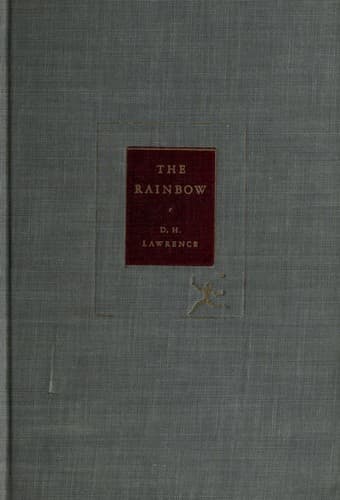
Domestic fiction; Family -- England -- Midlands -- Fiction; Midlands (England) -- Fiction
The Resurrection is to life, not to death. Shall I not see those who
have risen again walk here among men perfect in body and spirit, whole
and glad in the flesh, living in the flesh, loving in the flesh,
begetting children in the flesh, arrived at last to wholeness, perfect
without scar or blemish, healthy without fear of ill health? Is this
not the period of manhood and of joy and fulfilment, after the
Resurrection? Who shall be shadowed by Death and the Cross, being
risen, and who shall fear the mystic, perfect flesh that belongs to
heaven?
Can I not, then, walk this earth in gladness, being risen from sorrow?
Can I not eat with my brother happily, and with joy kiss my beloved,
after my resurrection, celebrate my marriage in the flesh with
feastings, go about my business eagerly, in the joy of my fellows? Is
heaven impatient for me, and bitter against this earth, that I should
hurry off, or that I should linger pale and untouched? Is the flesh
which was crucified become as poison to the crowds in the street, or is
it as a strong gladness and hope to them, as the first flower
blossoming out of the earth’s humus?
Chapter XI.
FIRST LOVE
As Ursula passed from girlhood towards womanhood, gradually the cloud
of self-responsibility gathered upon her. She became aware of herself,
that she was a separate entity in the midst of an unseparated
obscurity, that she must go somewhere, she must become something. And
she was afraid, troubled. Why, oh why must one grow up, why must one
inherit this heavy, numbing responsibility of living an undiscovered
life? Out of the nothingness and the undifferentiated mass, to make
something of herself! But what? In the obscurity and pathlessness to
take a direction! But whither? How take even one step? And yet, how
stand still? This was torment indeed, to inherit the responsibility of
one’s own life.
The religion which had been another world for her, a glorious sort of
play-world, where she lived, climbing the tree with the short-statured
man, walking shakily on the sea like the disciple, breaking the bread
into five thousand portions, like the Lord, giving a great picnic to
five thousand people, now fell away from reality, and became a tale, a
myth, an illusion, which, however much one might assert it to be true
an historical fact, one knew was not true—at least, for this
present—day life of ours. There could, within the limits of this life
we know, be no Feeding of the Five Thousand. And the girl had come to
the point where she held that that which one cannot experience in daily
life is not true for oneself.
Public-domain text, read in full here on John Shaqi.
Reviews
Reviews
No reviews yet
Be the first to share your thoughts on this work.
Elsewhere in the archive
Join the Discussion
Join the discussion
Sign in to leave a comment or review.
Sign InorCreate an account