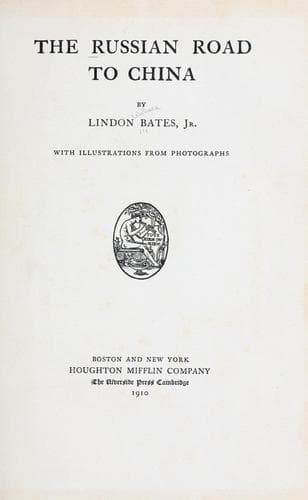
China -- Description and travel; Siberia (Russia) -- Description and travel; Velikaia Siberskaia magistral
The spectacled merchant Tu-Shiti, who has become prosperous from the
sale of Mongol wool, retakes for a visit, every two years, the long
camel-trail to Kalgan and China. The tea-trader, Chantu-fou, drinks
his wares alone. The slant-eyed clerks and booth-keepers trotting down
the streets in their skull-caps, hands tucked up the sleeves of their
blue jackets, plan no theatre-parties or amity balls, or sleigh-rides
in the biting air, as over the way in Kiahta. The seller of sweetmeats
will never be told to be sure and inclose the red and black New Year’s
card. There is no red-cheeked Chinese boy to smile as he munches your
sugar; to puzzle over your ticking watch as at Kotoi, or to tease the
tame crane in the courtyard. Not a girl appears on the narrow streets.
It is the sentence passed upon the generations of Chinese who have
gone to Mongolia, that no woman of their race shall pass the Wall. And
so it must remain, for never a home will be founded till China, the
unchanging, shall change.
Back and forth through the thoroughfares go the little men with the
queues flapping against their backs and their sallow uncommunicative
faces. Are they thinking of the time when they will have made their
little fortunes and can get back to China to enjoy them? As they wait
for customers in the little booths, do they plan the homes which none
of their blood may ever possess in Mongolia? When they sleep on their
wooden platforms, do they dream of faces in the Kingdom of the Sun?
Never will one know. Around the thoughts of the Chinaman arise the
ramparts of his isolation. What he believes, what he hopes, what he
dreams are not for you. The soul of China is behind the Wall.
The tarantass rolls out of the quaint weather-worn gateway of the
woman-less city of Maimachen. “How much they miss!” says André,
filling his pipe from the new pouch. “How much they escape!” retorts
Alexsimevich.
When in hot haste Pharaoh ordered out his great war-chariot to pursue
the rebellious Children of Israel, and thundered through his pyloned
gateway with plunging horses urged by the shouts of his Nubian
charioteers, he must have experienced, despite contrasts, much the same
physical sensations as those which we feel when the tarantass starts in
full gallop across the level plain to the distant range of mountains;
but where Pharaoh’s robe was white with dust, ours is white with snow,
and the sun, which baked his road, makes ours endurable.
Public-domain text, read in full here on John Shaqi.
Reviews
Reviews
No reviews yet
Be the first to share your thoughts on this work.
Elsewhere in the archive
Join the Discussion
Join the discussion
Sign in to leave a comment or review.
Sign InorCreate an account