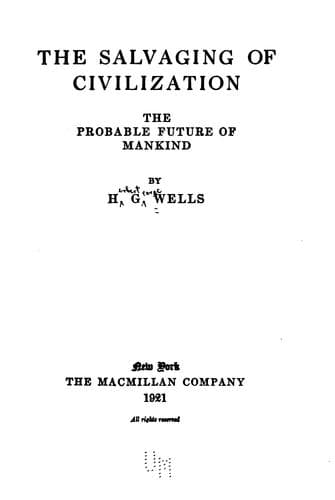
The Salvaging of CivilizationWells, H. G. (Herbert George)
Philosophy
The Salvaging of Civilization
Wells, H. G. (Herbert George)
Civilization, Modern -- 20th century; Education
Now the frank recognition of the book and not the lecture as the
substantial basis of instruction opens up a large and interesting range
of possibilities. It releases the process of learning from its old
servitude to place and to time. It is no longer necessary for the
student to go to a particular room, at a particular hour, to hear the
golden words drop from the lips of a particular teacher. The young man
who reads at eleven o'clock in the morning in luxurious rooms in
Trinity College, Cambridge, will have no very marked advantage over
another young man, employed during the day, who reads at eleven o'clock
at night in a bed-sitting-room in Glasgow. The former, you will say, may
get commentary and discussion, but there is no particular reason why the
latter should not form some sort of reading society with his fellows,
and discuss the question with them in the dinner hour and on the way to
the works. Nor is there any reason why he should not get tutorial help
as a university extension from the general educational organization, as
good in quality as any other tutorial help.
And this release of the essentials of a college education from
limitations of locality and time brought about by modern conditions, not
only makes it unnecessary for a man to come "up" to college to be
educated, but abolishes the idea that his educational effort comes to an
end when he goes "down." Attendance at college no longer justifies a
claim to education; inability to enter a college is no longer an excuse
for illiteracy.
Public-domain text, read in full here on John Shaqi.
Reviews
Reviews
No reviews yet
Be the first to share your thoughts on this work.
Elsewhere in the archive
Join the Discussion
Join the discussion
Sign in to leave a comment or review.
Sign InorCreate an account