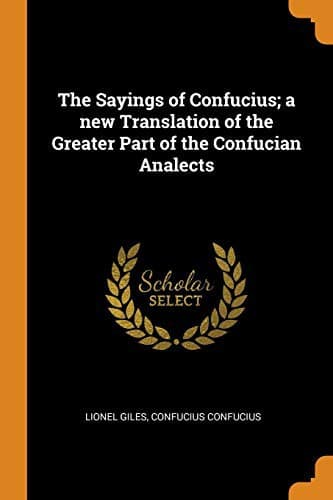
The Sayings of Confucius: A New Translation of the Greater Part of the Confucian AnalectsConfucius
ReligionEastern
The Sayings of Confucius: A New Translation of the Greater Part of the Confucian Analects
Confucius
Ethics -- China; Philosophy, Chinese
A virtuous ruler is like the Pole-star, which keeps its place, while
all the other stars do homage to it.
People despotically governed and kept in order by punishments may avoid
infraction of the law, but they will lose their moral sense. People
virtuously governed and kept in order by the inner law of self-control
will retain their moral sense, and moreover become good.
Duke Ai[1] asked, saying: What must I do that my people may be
contented?--Confucius replied: Promote the upright and dismiss all
evil-doers, and the people will be contented. Promote the
evil-doers and dismiss the upright, and the people will be discontented.
Chi K‘ang Tzu[2] asked by what means he might cause his people to be
respectful and loyal, and encourage them in the path of virtue. The
Master replied: Conduct yourself towards them with dignity, and you
will earn their respect; be a good son and a kind prince, and you will
find them loyal; promote the deserving and instruct those who fall
short, and they will be encouraged to follow the path of virtue.
Some one, addressing Confucius, said: Why, Sir, do you take no part in
the government?--The Master replied: What does the Book of History say
about filial piety?--Do your duty as a son and as a brother, and these
qualities will make themselves felt in the government. This, then,
really amounts to taking part in the government. Holding office need
not be considered essential.
The people can be made to follow a certain path, but they cannot be
made to know the reason why.
Tzu Kung asked for a definition of good government. The Master replied:
It consists in providing enough food to eat, in keeping enough
soldiers to guard the State, and in winning the confidence of the
people.--And if one of these three things had to be sacrificed, which
should go first?--The Master replied: Sacrifice the soldiers.--And if
of the two remaining things one had to be sacrificed, which should
it be?--The Master said: Let it be the food. From the beginning, men
have always had to die. But without the confidence of the people no
government can stand at all.
Ching, Duke of the Ch‘i State, questioned Confucius on the art of
government. Confucius replied: Let the sovereign do his duty as a
sovereign, the subject his duty as a subject, the father his duty as a
father, and the son his duty as a son.--A good answer! said the Duke;
for unless sovereign and subject, father and son do their respective
duties, however much grain there may be in the land, I could obtain
none to eat.
Tzu Chang put a question about the art of governing. The Master said:
Devote yourself patiently to the theory, and conscientiously to the
practice, of government.
Chi K‘ang Tzŭ asked Confucius for advice on the subject of government.
Confucius replied: To govern is to keep straight.[3] If you, Sir, lead
the people straight, which of your subjects will venture to fall out of
line?
Public-domain text, read in full here on John Shaqi.
Reviews
Reviews
No reviews yet
Be the first to share your thoughts on this work.
Join the Discussion
Join the discussion
Sign in to leave a comment or review.
Sign InorCreate an account