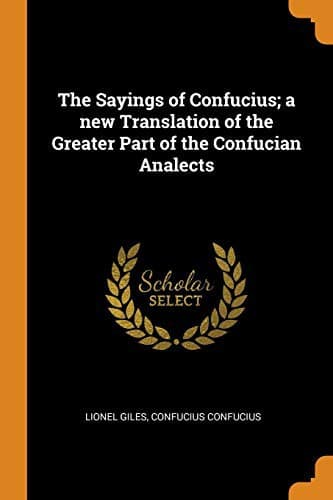
The Sayings of Confucius: A New Translation of the Greater Part of the Confucian AnalectsConfucius
ReligionEastern
The Sayings of Confucius: A New Translation of the Greater Part of the Confucian Analects
Confucius
Ethics -- China; Philosophy, Chinese
Chi K‘ang Tzŭ, being vexed by robbers, asked Confucius for his advice.
Confucius replied, saying: If you, sir, can check your own cupidity,
there will be no stealing, even though rewards should be offered for
theft.
Chi K‘ang Tzŭ questioned Confucius on a point of government, saying:
Ought not I to cut off the lawless in order to establish law and order?
What do you think?--Confucius replied: Sir, what need is there of the
death penalty in your system of government? If you showed a sincere
desire to be good, your people would likewise be good. The virtue of
the prince is like unto wind; that of the people, like unto grass. For
it is the nature of grass to bend when the wind blows upon it.
Tzŭ Lu asked for a hint on the art of governing. The Master replied:
Take the lead and set the example of diligent toil.--Asked for a
further hint, he said: Be patient and untiring.
Chung Kung, being Prime Minister to the head of the Chi clan, asked for
advice on governing. The Master said: Make a point of employing your
subordinates, overlook trifling mistakes, raise to office worthy and
able men.--But, said Chung Kung, how am I to discover these worthy men
and single them out for promotion?--Promote those that you know, was
the reply. As for those that you do not know, will not their claims be
brought before you by others?
Tzŭ Lu said: The Prince of Wei is waiting, Sir, for you to take up
the reins of government. Pray what is the first reform you would
introduce?--The Master replied: I would begin by defining terms and
making them exact.[4]--Oh, indeed! exclaimed Tzu Lu. But how can
you possibly put tilings straight by such a circuitous route?--The
Master said: How unmannerly you are, Yu! In matters which he does not
understand, the wise man will always reserve his judgment. If terms are
not correctly defined, words will not harmonise with things. If words
do not harmonise with things, public business will remain undone. If
public business remains undone, order and harmony will not flourish.
If order and harmony do not flourish, law and justice will not attain
their ends. If law and justice do not attain their ends, the people
will be unable to move hand or foot. The wise man, therefore, frames
his definitions to regulate his speech, and his speech to regulate his
actions. He is never reckless in his choice of words.
Public-domain text, read in full here on John Shaqi.
Reviews
Reviews
No reviews yet
Be the first to share your thoughts on this work.
Join the Discussion
Join the discussion
Sign in to leave a comment or review.
Sign InorCreate an account