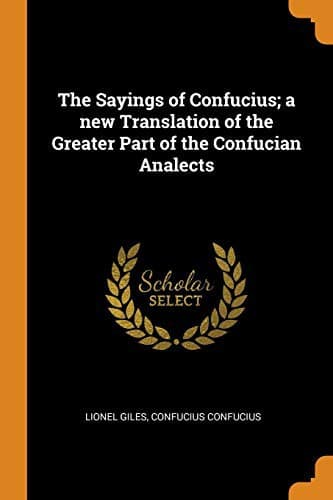
The Sayings of Confucius: A New Translation of the Greater Part of the Confucian Analects — John Shaqi
The Sayings of Confucius: A New Translation of the Greater Part of the Confucian AnalectsConfucius
ReligionEastern
The Sayings of Confucius: A New Translation of the Greater Part of the Confucian Analects
Confucius
Ethics -- China; Philosophy, Chinese
Fan Ch‘ih asked to be taught the art of husbandry. The Master said:
Any farmer can teach you that better than I can. He then asked to be
taught gardening. The Master said: Any gardener will teach you that
better than I can. Fan Ch‘ih having gone out, the Master said: What a
small-minded man is Fan Hsü! If the ruler is addicted to modesty and
self-control, his people will not permit themselves to be irreverent.
If the ruler loves justice and duty, his people will not venture to be
unruly. If the ruler loves sincerity and good faith, the people will
not be slow to respond. Such being his qualities, the people will flock
to him from all quarters, with their babes strapped to their backs.
What need for him to know the art of husbandry?[5]
The Master said: If the ruler is personally upright, his subjects will
do their duty unbidden; if he is not personally upright, they will not
obey, whatever his bidding.
When the Master went to Wei, Jan Yu drove his carriage. The Master
said: What an abundant population!--Jan Yu said: Now that the people
are so abundant, what is the next thing to be done?--Enrich them, said
Confucius.--And having enriched them, what then?--Teach them, was the
reply.
The Master said: If a country had none but good rulers for a hundred
years, crime might be stamped out and the death-penalty abolished. How
true this saying is!
If a kingly sovereign were to appear, by the end of one generation
natural goodness would prevail.
If a man can reform his own heart, what should hinder him from taking
part in government? But if he cannot reform his own heart, what has he
to do with reforming others?
Duke Ting[6] asked if there was a single sentence by which a country
might be made to flourish. Confucius answered: No single sentence can
be expected to have such a virtue as this. But there is the common
saying: "To be a good king is difficult; to be a good minister is not
easy." He who realises the difficulty of being a good king--has he not
almost succeeded in making his country prosper by a single sentence?
--Is there a single sentence, continued the Duke, by which a country
can be ruined?--Confucius answered: No such power can reside in any
single sentence. But there is a saying: "I have no joy in kingly rule,
I rejoice only because none can oppose my will." Now if the king's will
is good, and none opposes it, all may be well; but if it is not good,
and yet none opposes it, has he not almost succeeded in ruining his
country be a single sentence?
The Duke of Shê[7] asked about the conditions of good government. The
Master said: Government is good when it makes happy those who live
under it and attracts those who live far away.
Tzü Hsia, when governor of Chü-fu,[8] asked for advice on government.
The Master said: Do not try to do things in a hurry. Do not be intent
on small gains. What is done quickly is not done thoroughly; and if
small gains are considered, great things remain unaccomplished.
Public-domain text, read in full here on John Shaqi.
Reviews
Reviews
No reviews yet
Be the first to share your thoughts on this work.
Join the Discussion
Join the discussion
Sign in to leave a comment or review.
Sign InorCreate an account