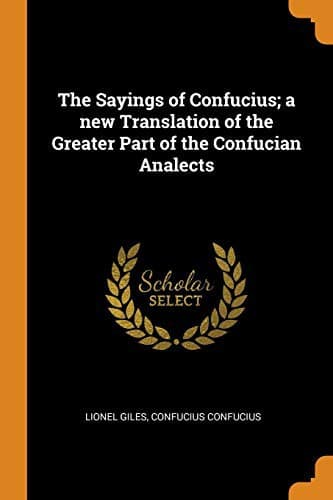
The Sayings of Confucius: A New Translation of the Greater Part of the Confucian AnalectsConfucius
ReligionEastern
The Sayings of Confucius: A New Translation of the Greater Part of the Confucian Analects
Confucius
Ethics -- China; Philosophy, Chinese
When the Master came to Wu-ch‘êng, he heard the sound of singing and
stringed instruments. He was pleased, but said with a smile: Is it
necessary to take a pole-axe to kill a fowl?--Tzŭ Yu replied: Some
time ago, Sir, I heard you say that the study of true principles made
the ruler beneficent and men of the lower class easy to govern.--My
children, said the Master, Yen is right. What I said was only in
jest.[15]
Tzŭ Chang asked Confucius, saying: What are the essentials of good
government?--The Master said: Esteem the five excellent, and banish the
four evil things; then you will become fit to govern.--Tzŭ Chang asked:
What are the five excellent things?--The Master replied: The wise and
good ruler is benevolent without expending treasure; he lays burdens
on the people without causing them to grumble; he has desires without
being covetous; he is serene without being proud; he is awe-inspiring
without being ferocious.--He is benevolent without expending treasure:
what does that mean?--The Master replied: He simply follows the course
which naturally brings benefit to the people.[16] Is he not thus
benevolent without expending treasure? In imposing burdens, he chooses
the right time and the right means, and nobody can grumble. His desire
is for goodness, and he achieves it; how should he be covetous? The
wise and good ruler never allows himself to be negligent, whether he is
dealing with many men or with few, with small matters or with great.
Is this not serenity without pride? He has his cap and robe properly
adjusted, and throws a noble dignity into his looks, so that his
gravity inspires onlookers with respect. Is he not thus awe-inspiring
without being ferocious?--Tzŭ Chang then asked: What are the four evil
things?--The Master said: Cruelty:--leaving the people in their native
ignorance, yet punishing their wrong-doing with death. Oppression:--
requiring the immediate completion of tasks imposed without previous
warning. Ruthlessness:--giving vague orders, and then insisting on
punctual fulfilment. Peddling husbandry:--stinginess in conferring the
proper rewards on deserving men.[17]
[1] _Ai_ was the honorary epithet of the Duke of Lu who was reigning
during the last years of Confucius' life.
[2] Chi K‘ang Tzu succeeded to the headship of the great Chi family in
491, when Chi Huan died, by whom he was advised to recall Confucius
from his long wanderings. The sage, however, did not return until eight
years later.
[3] The point of the original lies partly in the fact that the Chinese
words for "govern" and "straight" are similar in form and identical in
sound.
Public-domain text, read in full here on John Shaqi.
Reviews
Reviews
No reviews yet
Be the first to share your thoughts on this work.
Join the Discussion
Join the discussion
Sign in to leave a comment or review.
Sign InorCreate an account