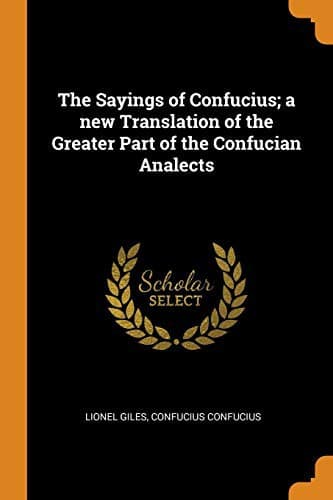
The Sayings of Confucius: A New Translation of the Greater Part of the Confucian AnalectsConfucius
ReligionEastern
The Sayings of Confucius: A New Translation of the Greater Part of the Confucian Analects
Confucius
Ethics -- China; Philosophy, Chinese
No great man has suffered more than Confucius from the stupidity, the
misstatements and the misrepresentations, from the lack of sympathy
and generosity, and, in some points, from the pure ignorance of his
critics. Early travellers arriving from the West, amongst a people
utterly alien to themselves in almost every detail--language,
dress, habits, modes of thought, ethical ideals and general view of
life--would have done well to walk very warily and, in the Confucian
phrase, "to reserve their judgment" on what they saw and heard around
them. But patience and discrimination were the very last virtues
which these inquisitive newcomers had a mind to practise; and,
unluckily, the extraordinary fame of the national sage marked him out
as one of the earliest victims to their thirst for the marvellous.
On the strength of Chinese evidence, readily forthcoming and eagerly
swallowed, the most exaggerated accounts of this new luminary were
poured into the ears of Europe, and it may well be imagined that these
enthusiastic reports suffered no diminution in the telling. Confucius
was the prince of philosophers, the wisest and most consummate of
sages, the loftiest moralist, the most subtle and penetrating intellect
that the world had ever seen. He was a statesman, a bard, an historian
and an antiquary rolled into one. His sagacity put the most illustrious
of ancient and modern philosophers to shame. He was the greatest and
noblest representative of the greatest, happiest, and most highly
civilised people on the face of the earth. Such extravagant eulogy
could only pave the way for disillusionment. When, after the lapse of
a hundred years or so, foreigners had painfully acquired sufficient
knowledge of the language to enable them to begin translating, after
a fashion, parts of the Classics said to have been composed by this
glorious sage, or at least containing the choicest pearls of his
wisdom still extant, it is not altogether surprising that the results
did not come up to the general expectation. Reactionist in, and it
soon became the fashion to decry the once much-lauded philosopher.
His sayings, which had been extolled as the very epitome of wisdom,
were now voted jejune and commonplace. His teaching was found to be
shallow, disjointed, unsatisfying. He was blamed for his materialistic
bias, for his rigid formalism, for his poverty of ideas, for his lack
of spiritual elevation. Comparisons, much in his disfavour, were
drawn between him and the founders of other world-systems of religion
and ethics. All this before the circumstances of his career had been
studied, before the surface of contemporary Chinese history had been so
much as scratched, before the host of native commentators and critics
had been consulted, or their existence even become known; above all,
before the very book which contained his authentic sayings had been
translated with anything approaching to exactness or understanding, or
Public-domain text, read in full here on John Shaqi.
Reviews
Reviews
No reviews yet
Be the first to share your thoughts on this work.
Join the Discussion
Join the discussion
Sign in to leave a comment or review.
Sign InorCreate an account