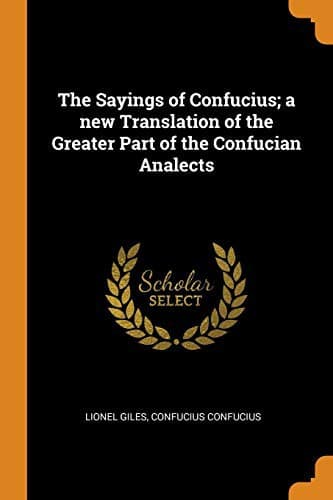
The Sayings of Confucius: A New Translation of the Greater Part of the Confucian Analects — John Shaqi
The Sayings of Confucius: A New Translation of the Greater Part of the Confucian AnalectsConfucius
ReligionEastern
The Sayings of Confucius: A New Translation of the Greater Part of the Confucian Analects
Confucius
Ethics -- China; Philosophy, Chinese
with a faint realisation of its numerous difficulties and pit-falls.
Such was still the deplorable state of things when Legge set to work
on his translation of the Confucian Canon, which when completed many
years later, with its exhaustive prolegomena, notes and appendices,
formed a truly wonderful monument of research and erudition. With
its publication, Chinese scholarship was carried at once to a higher
plane, and foreign study of Confucian doctrine began in earnest.
The heavy accumulations of ignorance and error were in large part
removed, and the figure of the great Teacher began at last to emerge
from the "obliterating sands of time." His sayings were no longer read
as interesting but desultory fragments of conversation, but studied
in relation to the events of his life. From various Chinese sources,
the chief of which were the Analects themselves and Ssŭ-ma Ch‘ien's
biography, Legge managed to compile a good and coherent account of
the sage's life, work and wanderings, which was an enormous advance
on anything that had been done before, and is not likely, even in the
future, to undergo any considerable addition or amendment. There are
many minor points which may be disputed, and many long blanks which
may never be filled up, but taken as a whole, the chronology and the
leading events of the life of Confucius must now be considered as
finally settled.
If Legge is on firm ground where hard facts are concerned, it is far
otherwise when he comes to draw inferences from these facts, to sum up
the salient principles of Confucian ethics, and to pass judgment on the
character of Confucius himself. His pronouncements on these points,
too hastily accepted as final, need to be carefully re-examined and,
as I shall hope to show, largely modified if not totally reversed. His
opinion, of course, was based chiefly on his own interpretation of the
more important sayings in the Analects, in translating which he had
the oral help of native scholars, besides the benefit of voluminous
standard commentaries. Thus equipped for his task, it cannot but appear
strange that he, admittedly a great sinologue, should have gone so
far astray as to miss the very core and essence of the doctrines to
the elucidation of which he devoted most of his life. The explanation
may lie in the fact that he was a Christian missionary in the first
place, and only secondly a scientific student; he had come to teach
and convert the heathen, not to be taught or converted by them. This
preconceived idea acted as a drag on the free use of his understanding,
and prevented him from entering whole-heartedly into his subject. We
are told that the Master himself had "no foregone conclusions," but
Legge's whole attitude to Confucianism bespoke one comprehensive and
fatal foregone conclusion--the conviction that it must at every point
prove inferior to Christianity. A certain inelasticity of mind showed
itself also in the way in which he approached the work of translation.
Public-domain text, read in full here on John Shaqi.
Reviews
Reviews
No reviews yet
Be the first to share your thoughts on this work.
Join the Discussion
Join the discussion
Sign in to leave a comment or review.
Sign InorCreate an account