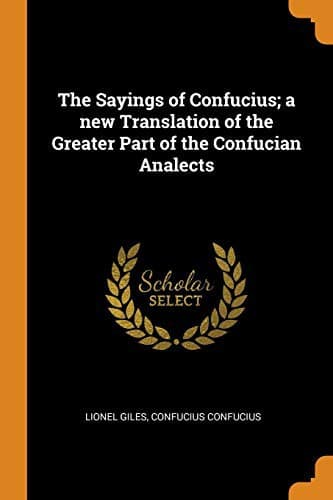
The Sayings of Confucius: A New Translation of the Greater Part of the Confucian AnalectsConfucius
ReligionEastern
The Sayings of Confucius: A New Translation of the Greater Part of the Confucian Analects
Confucius
Ethics -- China; Philosophy, Chinese
Tzŭ Yu said: The followers and disciples of Tzŭ Hsia are trained
well enough in sprinkling and sweeping the floor, in responding and
answering questions, in entering and leaving a room. But these are mere
accessories. Of fundamentals they are totally ignorant. How can this be
considered enough?--Tzŭ Hsia, hearing of these remarks, said: Ah! Yen
Yu is mistaken. It is not the way of the wise teacher to distinguish
between subjects of first-class importance, which must be taught, and
subjects of secondary importance, which may be neglected. He cultivates
minds just as he would cultivate plants, each species requiring
separate treatment. It cannot be the wise man's way to produce
confusion and error. He only is inspired who teaches methodically,
having a beginning and an end.
Tzŭ Hsia said: Let the official who has time to spare devote it to
study; let the student who has time to spare devote it to public
affairs.
Tzŭ Yu said: The rites of mourning should not extend beyond the
expression of heartfelt grief.
The chief of the Mêng family having appointed Yang Fu to be Criminal
Judge, the latter went to Tsêng Tzŭ for advice. Tsêng Tzŭ said: Our
rulers have lost their way, and the people have long been scattered and
distracted. When you discover the facts of a crime, be not moved with
joy but rather with pity and grief.
Tzŭ Kung said: The mistakes of a great and good man are like eclipses
of the sun and moon: his failing is seen by all, and when he repairs
it, all look up to him with awe.
[1] Tzŭ Kung, who had passed from poverty to affluence, wished to
draw attention to his own freedom from the vices characteristic of
each state, but his Master recommends the pursuit of virtue in a
more positive form. The quotation from the Odes merely enforces the
necessity of unceasing labour in the matter of self-improvement.
Confucius was always delighted with an apt illustration from his
favourite book.
[2] The Chinese of the above is as usual extremely concise. For several
turns of phrase I am indebted to Mr. Jennings's translation.
[3] Literally, "display toil." The meaning seems to be that of the
Tacitean phrase "exprobrare beneficia."
[4] Literally, "one who faces south"--the customary position for
royalty enthroned.
[5] The reigning duke, who had succeeded his grandfather and was now
opposing his father's attempts to return from exile and secure the
throne. See p. 43.
[6] See note on p. 74.
[7] The disciple Yen Hui.
[8] Believed to constitute the boundaries of the habitable earth, like
Homer's Ocean-river. Hence the phrase is used as a synonym for the
Chinese Empire.
[9] A minister in the Wei State.
[10] A proverb.
[11] A rebuke to the Prince for his greed in a time of distress.
Public-domain text, read in full here on John Shaqi.
Reviews
Reviews
No reviews yet
Be the first to share your thoughts on this work.
Join the Discussion
Join the discussion
Sign in to leave a comment or review.
Sign InorCreate an account