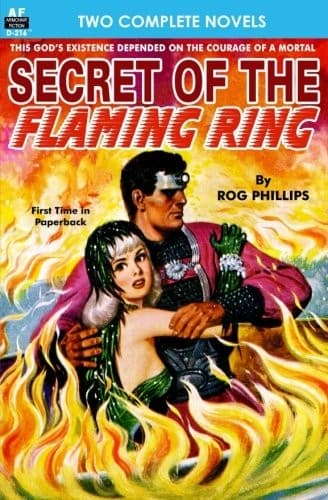
Mars (Planet) -- Fiction; Mystery fiction; Science fiction
But on parabolite, even these mighty weapons were useless. Oh, they had
found that training a battery of them on a chunk of parabolite, for
a period of days, with an enormous drain of power keeping the weapons
firing continuously, did get results. The overall mass of the chunk
was reduced by one-millionth of a gram. Which was less than useless,
because not only was that amount completely impractical to obtain,
but it was not even obtained, thanks to the collapsers' destructive
potency. It was merely destroyed.
And so, vast acres of this fortune-making mineral lay all about the
planet, as common as sandstone was on Earth. And no one had any idea of
how to get any of it, not even the natives.
Yes, there were natives, of a sort, on Mars. Strange beings, albeit
friendly, made up, except for a fraction of a percent, of sugar.
They were crystalline, these beings, covered over with prisms of bright
red sugar that gave them, with their scuttling gait and long pointed
tails, the appearance of man-sized lizards. A lot of their metabolism
was a mystery to us, but we did know that they, like plants on Earth,
lived by a sort of modified photosynthesis.
At first thought, this seems strange, since we are used to green as the
primary necessity in a photosynthetic metabolism. But it made sense
when you remember that foliage looks green because the green rays of
the sun are reflected, and the red rays absorbed. Since a crystal
passes only the rays which correspond to its color-structure, they
did quite well, photosynthetically. Air and water were their chief
foods, of course. The water they inhaled through rubbery-looking hollow
tongues which extended a good two feet from their wide, dragon like
mouths. The distance was a necessity, due to their exteriors, which, as
I've said, were made of red crystalline sugar. They could take water on
the inside, but it was fatal on the outside.
The first men on Mars had felt pretty silly standing guard over their
encampments with water pistols. But the sugarfeet, as they came to be
called, proved friendly enough in a nonobsequious way. They seemed, on
investigation, to be the Martian equivalent of cats.
By that I mean that they must have been the self-sufficient pets of the
Ancient Martians. They tended to be standoffish and annoyingly smug,
but not menacing in any way. After all, why should they be menacing?
We had nothing they wanted. Our food was useless to them, as were our
clothes, gold or anything else in the way of possessions. They liked
our water, of course, but long evolution in the Martian deserts had
kept their physical need for this commodity down to a minimum. The
average sugarfoot drank about a pint of water per week, which was no
menace to us, even when we'd first landed and water was in short supply.
Public-domain text, read in full here on John Shaqi.
Reviews
Reviews
No reviews yet
Be the first to share your thoughts on this work.
Join the Discussion
Join the discussion
Sign in to leave a comment or review.
Sign InorCreate an account