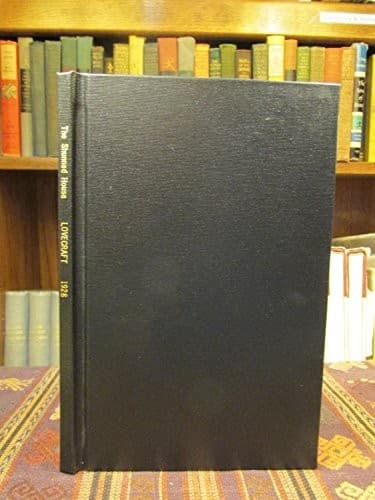
The Shunned HouseLovecraft, H. P. (Howard Phillips)
Science
The Shunned House
Lovecraft, H. P. (Howard Phillips)
Haunted houses -- Fiction; Horror tales, American
Meanwhile poor Rhoby Harris, in her madness, gave voice to dreams and
imaginings of the most hideous sort. At times her screams became
insupportable, and for long periods she would utter shrieking horrors
which necessitated her son's temporary residence with his cousin, Peleg
Harris, in Presbyterian Lane near the new college building. The boy
would seem to improve after these visits, and had Mercy been as wise as
she was well-meaning, she would have let him live permanently with
Peleg. Just what Mrs. Harris cried out in her fits of violence,
tradition hesitates to say; or rather, presents such extravagant
accounts that they nullify themselves through sheer absurdity. Certainly
it sounds absurd to hear that a woman educated only in the rudiments of
French often shouted for hours in a coarse and idiomatic form of that
language, or that the same person, alone and guarded, complained wildly
of a staring thing which bit and chewed at her. In 1772 the servant
Zenas died, and when Mrs. Harris heard of it she laughed with a shocking
delight utterly foreign to her. The next year she herself died, and was
laid to rest in the North Burial Ground beside her husband.
Upon the outbreak of trouble with Great Britain in 1775, William Harris,
despite his scant sixteen years and feeble constitution, managed to
enlist in the Army of Observation under General Greene; and from that
time on enjoyed a steady rise in health and prestige. In 1780, as a
captain in the Rhode Island forces in New Jersey under Colonel Angell,
he met and married Phebe Hetfield of Elizabethtown, whom he brought to
Providence upon his honorable discharge in the following year.
The young soldier's return was not a thing of unmitigated happiness. The
house, it is true, was still in good condition; and the street had been
widened and changed in name from Back Street to Benefit Street. But
Mercy Dexter's once robust frame had undergone a sad and curious decay,
so that she was now a stooped and pathetic figure with hollow voice and
disconcerting pallor--qualities shared to a singular degree by the one
remaining servant Maria. In the autumn of 1782 Phebe Harris gave birth
to a still-born daughter, and on the fifteenth of the next May Mercy
Dexter took leave of a useful, austere, and virtuous life.
Public-domain text, read in full here on John Shaqi.
Reviews
Reviews
No reviews yet
Be the first to share your thoughts on this work.
Join the Discussion
Join the discussion
Sign in to leave a comment or review.
Sign InorCreate an account