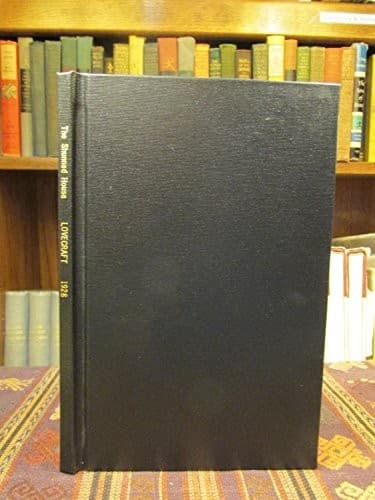
The Shunned HouseLovecraft, H. P. (Howard Phillips)
Science
The Shunned House
Lovecraft, H. P. (Howard Phillips)
Haunted houses -- Fiction; Horror tales, American
William Harris, at last thoroughly convinced of the radically
unhealthful nature of his abode, now took steps toward quitting it and
closing it for ever. Securing temporary quarters for himself and his
wife at the newly opened Golden Ball Inn, he arranged for the building
of a new and finer house in Westminster Street, in the growing part of
the town across the Great Bridge. There, in 1785, his son Dutee was
born; and there the family dwelt till the encroachments of commerce
drove them back across the river and over the hill to Angell Street, in
the newer East Side residence district, where the late Archer Harris
built his sumptuous but hideous French-roofed mansion in 1876. William
and Phebe both succumbed to the yellow fever epidemic of 1797, but Dutee
was brought up by his cousin Rathbone Harris, Peleg's son.
Rathbone was a practical man, and rented the Benefit Street house
despite William's wish to keep it vacant. He considered it an obligation
to his ward to make the most of all the boy's property, nor did he
concern himself with the deaths and illnesses which caused so many
changes of tenants, or the steadily growing aversion with which the
house was generally regarded. It is likely that he felt only vexation
when, in 1804, the town council ordered him to fumigate the place with
sulfur, tar, and gum camphor on account of the much-discussed deaths of
four persons, presumably caused by the then diminishing fever epidemic.
They said the place had a febrile smell.
Dutee himself thought little of the house, for he grew up to be a
privateersman, and served with distinction on the _Vigilant_ under
Captain Cahoone in the War of 1812. He returned unharmed, married in
1814, and became a father on that memorable night of September 23, 1815,
when a great gale drove the waters of the bay over half the town, and
floated a tall sloop well up Westminster Street so that its masts almost
tapped the Harris windows in symbolic affirmation that the new boy,
Welcome, was a seaman's son.
Welcome did not survive his father, but lived to perish gloriously at
Fredericksburg in 1862. Neither he nor his son Archer knew of the
shunned house as other than a nuisance almost impossible to
rent--perhaps on account of the mustiness and sickly odor of unkempt old
age. Indeed, it never was rented after a series of deaths culminating in
1861, which the excitement of the war tended to throw into obscurity.
Carrington Harris, last of the male line, knew it only as a deserted and
somewhat picturesque center of legend until I told him my experience. He
had meant to tear it down and build an apartment house on the site, but
after my account decided to let it stand, install plumbing, and rent it.
Nor has he yet had any difficulty in obtaining tenants. The horror has
gone.
3
Public-domain text, read in full here on John Shaqi.
Reviews
Reviews
No reviews yet
Be the first to share your thoughts on this work.
Join the Discussion
Join the discussion
Sign in to leave a comment or review.
Sign InorCreate an account