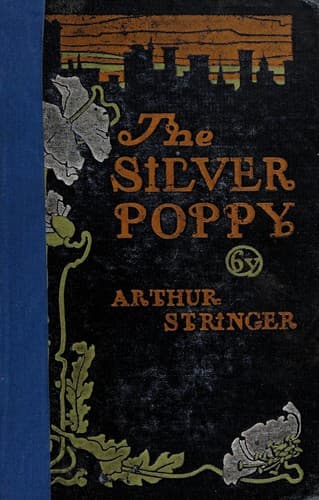
Authors -- Fiction; Canadian fiction; Impostors and imposture -- Fiction; New York (N.Y.) -- Social life and customs -- Fiction
Repellier knew as well as he how, with time, the novelty of such things
could lose its early glitter. The old artist felt troubled in spirit.
"Will you take my advice for a second time?" he asked suddenly.
Hartley said he would, gladly.
"Well, I'd suggest that you migrate before long--I think you'd better
change quarters, get where you'll have more sun and air. They're pretty
wearing, these places; you've been getting too much of a good thing."
Then he smiled, but hesitated to say what was on his lips.
"I think I'll stick it out," said Hartley stoutly.
They were in the dingy, squalid room by this time, and for some unknown
reason a constraint fell over them. The old artist noticed the Oxford
photographs stuck up about the broken walls and the gaps in the sadly
depleted shelf of books. He had never thought Hartley had it in him.
And again he felt troubled in spirit--he stood so helpless before the
very man on whom he had pinned his faith. He wondered in what way he
could reach a hand out to him--he knew only too well what any open offer
of help would mean.
"I wish you'd use your friends a little more," he said, as they sat and
smoked together.
"I've so jolly few, I've got to keep them," said Hartley, with his slow
English smile.
"You're a punctilious beggar, Hartley! I'm beginning to believe the Dean
of Worcester was right when he said you needed some of the Matthew
Arnold knocked out of you."
* * * * *
When Repellier had taken his departure, leaving his host with a
new-born, indefinite sense of unrest and discontent, Hartley thought it
all over. Why did he not use his friends? Repellier had dropped that
seed of interrogation on very open soil. Alone in his room Hartley
recalled what Cordelia Vaughan had said to him in her soft contralto
about nothing succeeding in America so much as success. After all, might
there not be such a thing as an overscrupulous judgment of motive and
action for the man of the world? Ethics, he tried to argue with himself,
were suitable enough for Oxford. What he wanted now was opportunity. He
demanded his chance. He had been too thin-skinned. He was in Rome, and
he must do what the Romans do. It was all his Anglo-Saxon tendency to be
stiff-necked. Why did he not make use of his friends? It was the very
nature of such things that made all friendship valuable. It would simply
be a matter of give and take between them. It would, too, never become a
matter of sentiment--he prided himself that he had his heart too well in
hand for that. He had too many great things still undone for any
entanglements of that sort. And yet, and yet--as the lonely young author
sat back on his hard-bottomed chair and recalled the soft contralto of
the Southern voice the noisy rattle of the elevated trains went out of
his ears. He was a stranger, and she had been very kind to him. The
confusion of yellows that floated and drifted before his eyes darkened
Public-domain text, read in full here on John Shaqi.
Reviews
Reviews
No reviews yet
Be the first to share your thoughts on this work.
Join the Discussion
Join the discussion
Sign in to leave a comment or review.
Sign InorCreate an account