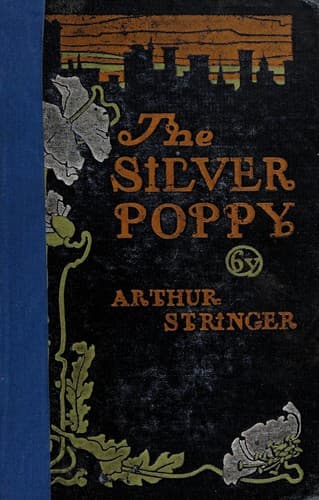
Authors -- Fiction; Canadian fiction; Impostors and imposture -- Fiction; New York (N.Y.) -- Social life and customs -- Fiction
and deepened into gold, and the eyes that before had seemed cold to him
grew warm and lustrous.
He had been a very lonely young man. In his head fermented a dozen great
things still unaccomplished; chance had broken no clean channel through
the sour stagnation of those fermenting cross-purposes. And now the
artist in him aspired desperately for freedom. Again he wondered if,
after all, his older, uncompromising ideality, his older rigid sense of
right and wrong, was not the result of mingled priggishness and
petulance. Even though he had to stoop a little for this first start,
after all, it was a start. And once under way surely some new and
unforeseen avenue of escape would offer itself. And if for a time he
felt a half-caged conscience beating against its bars, he muffled that
last tremulous flutter in his cry for some release from the sordid
drudgery and the stultifying gloom that was holding him down.
Sitting up late into the night, Hartley rewrote his article on Cordelia
Vaughan. The insinuation of the personal equation into his work was
easier than it had looked. Time was, he knew, when he had rejoiced in
attacking these seven-day wonders of the world of letters, the noisy
idols with their posings and world-old impositions. He himself for
months had been doing miserable hack work in the services of an
unscrupulous syndicate, for a few paltry dollars a week, that he might
hold unpolluted from all that was sordid and commercial that inner and
more sacred fount. He had thrown his coat in the mire that his goddess
might still walk with white feet. He had never confounded his serious
work with the work of the moment. He had not asked for much; he could
live on little, very little indeed. He was willing to work humbly, so
long as he might only see some ultimate opportunity to labor on
unharrassed by the worries and impecuniosities that now hung over him,
and all but stifled him. With the Muse there must be no divided love. He
had long since learned that while the work of the creative mind is
joyous enough, it is likewise exhausting. All he cried out for was
opportunity. It was the artist aspiring for his freedom. It was the
creator casting about for his chance to create.
There were men in the city, Hartley knew, who were making fortunes by
their pen. But they were men who, only too often, had allowed the
temporary interest to intervene, men who had sought the immediate reward
of the dollar, men who put their finger, adroitly enough, on the pulse
of the world and gave it what it asked for, regardless of conscience and
consequence. Was he, too, to become one of these? Was this fragile and
pale-faced priestess of Mnemosyne, whose friendship had promised so much
for him, insidiously to forge the first link in that golden chain which
was to bind him down? Yet he had done nothing that was dishonorable.
After all, even the artist must have his modern ideas of the business
side of life. It was the law of the land.
Public-domain text, read in full here on John Shaqi.
Reviews
Reviews
No reviews yet
Be the first to share your thoughts on this work.
Join the Discussion
Join the discussion
Sign in to leave a comment or review.
Sign InorCreate an account