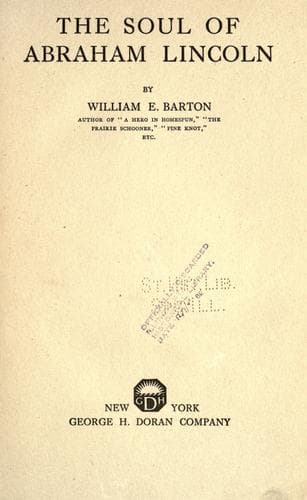
The Soul of Abraham LincolnBarton, William E. (William Eleazar)
Religion
The Soul of Abraham Lincoln
Barton, William E. (William Eleazar)
Lincoln, Abraham, 1809-1865 -- Religion; Presidents -- United States -- Biography
McPheeters back over the heads of
a majority of his own congregation, that too will be declined. I will
not have control of any church on any side." The case finally ended by
the exclusion of Dr. McPheeters from his pulpit by the order of the
presbytery having ecclesiastical authority in the case.
In this wise and salutary abstention from any interference with the
churches, which was dictated by his own convictions as well as enjoined
by the Constitution, the President did not always have the support
of his subordinates. He had not only, as we have seen, to administer
occasional rebukes to his over-zealous generals, but even in his own
Cabinet he was sometimes compelled to overrule a disposition to abuse
of authority in things spiritual. Several weeks after he had so clearly
expressed himself in the McPheeters case, he found, to his amazement,
that the Secretary of War had been giving orders virtually placing the
army in certain places at the disposition of a Methodist bishop for the
enforcement of his ecclesiastical decrees. He addressed to Mr. Stanton
a note of measured censure,[80] which was followed by an order from the
War Department explaining and modifying the more objectionable features
of the former document. The Secretary explained that his action had
no other intention than to furnish "a means of rallying the Methodist
people in favor of the Union, in localities where the rebellion had
disorganized and scattered them."[81] This explanation was not entirely
satisfactory to the President, but he thought best to make no further
public reference to the matter. Scarcely was this affair disposed of
when a complaint was received from Memphis of some interference by the
military with a church edifice there. Mr. Lincoln made upon the paper
this peremptory indorsement: "If the military have military need of
the church building, let them keep it; otherwise, let them get out
of it, and leave it and its owners alone, except for the causes that
justify the arrest of anyone."[82] Two months later the President,
hearing of further complications in the case, made still another
order, which even at the risk of wearying the reader we will give,
from his own manuscript, as illustrating not only his conscientious
desire that justice should be done, but also the exasperating obstacles
he was continually compelled to surmount, in those troubled times,
to accomplish, with all the vast powers at his disposition, this
reasonable desire.
Public-domain text, read in full here on John Shaqi.
Reviews
Reviews
No reviews yet
Be the first to share your thoughts on this work.
Elsewhere in the archive
Join the Discussion
Join the discussion
Sign in to leave a comment or review.
Sign InorCreate an account