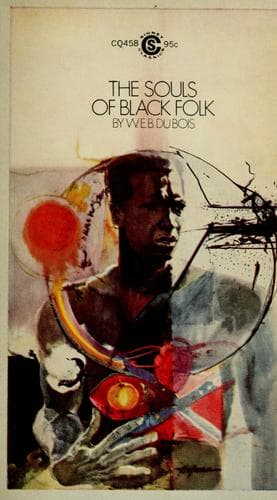
The Souls of Black FolkDu Bois, W. E. B. (William Edward Burghardt)
History
The Souls of Black Folk
Du Bois, W. E. B. (William Edward Burghardt)
African Americans
Nor does the paradox and danger of this situation fail to interest and
perplex the best conscience of the South. Deeply religious and
intensely democratic as are the mass of the whites, they feel acutely
the false position in which the Negro problems place them. Such an
essentially honest-hearted and generous people cannot cite the
caste-levelling precepts of Christianity, or believe in equality of
opportunity for all men, without coming to feel more and more with each
generation that the present drawing of the color-line is a flat
contradiction to their beliefs and professions. But just as often as
they come to this point, the present social condition of the Negro
stands as a menace and a portent before even the most open-minded: if
there were nothing to charge against the Negro but his blackness or
other physical peculiarities, they argue, the problem would be
comparatively simple; but what can we say to his ignorance,
shiftlessness, poverty, and crime? can a self-respecting group hold
anything but the least possible fellowship with such persons and
survive? and shall we let a mawkish sentiment sweep away the culture of
our fathers or the hope of our children? The argument so put is of
great strength, but it is not a whit stronger than the argument of
thinking Negroes: granted, they reply, that the condition of our masses
is bad; there is certainly on the one hand adequate historical cause
for this, and unmistakable evidence that no small number have, in spite
of tremendous disadvantages, risen to the level of American
civilization. And when, by proscription and prejudice, these same
Negroes are classed with and treated like the lowest of their people,
simply because they are Negroes, such a policy not only discourages
thrift and intelligence among black men, but puts a direct premium on
the very things you complain of,—inefficiency and crime. Draw lines of
crime, of incompetency, of vice, as tightly and uncompromisingly as you
will, for these things must be proscribed; but a color-line not only
does not accomplish this purpose, but thwarts it.
In the face of two such arguments, the future of the South depends on
the ability of the representatives of these opposing views to see and
appreciate and sympathize with each other’s position,—for the Negro to
realize more deeply than he does at present the need of uplifting the
masses of his people, for the white people to realize more vividly than
they have yet done the deadening and disastrous effect of a
color-prejudice that classes Phillis Wheatley and Sam Hose in the same
despised class.
Public-domain text, read in full here on John Shaqi.
Reviews
Reviews
No reviews yet
Be the first to share your thoughts on this work.
Elsewhere in the archive
Join the Discussion
Join the discussion
Sign in to leave a comment or review.
Sign InorCreate an account