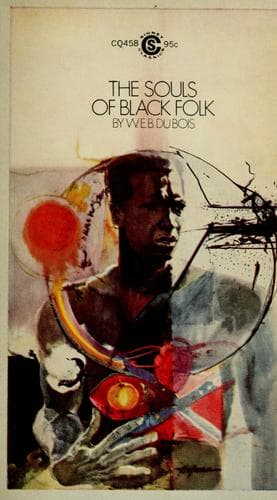
The Souls of Black FolkDu Bois, W. E. B. (William Edward Burghardt)
History
The Souls of Black Folk
Du Bois, W. E. B. (William Edward Burghardt)
African Americans
One day—it was in 1842, and the springtide was struggling merrily with
the May winds of New England—he stood at last in his own chapel in
Providence, a priest of the Church. The days sped by, and the dark
young clergyman labored; he wrote his sermons carefully; he intoned his
prayers with a soft, earnest voice; he haunted the streets and accosted
the wayfarers; he visited the sick, and knelt beside the dying. He
worked and toiled, week by week, day by day, month by month. And yet
month by month the congregation dwindled, week by week the hollow walls
echoed more sharply, day by day the calls came fewer and fewer, and day
by day the third temptation sat clearer and still more clearly within
the Veil; a temptation, as it were, bland and smiling, with just a
shade of mockery in its smooth tones. First it came casually, in the
cadence of a voice: “Oh, colored folks? Yes.” Or perhaps more
definitely: “What do you _expect?_” In voice and gesture lay the
doubt—the temptation of Doubt. How he hated it, and stormed at it
furiously! “Of course they are capable,” he cried; “of course they can
learn and strive and achieve—” and “Of course,” added the temptation
softly, “they do nothing of the sort.” Of all the three temptations,
this one struck the deepest. Hate? He had outgrown so childish a thing.
Despair? He had steeled his right arm against it, and fought it with
the vigor of determination. But to doubt the worth of his life-work,—to
doubt the destiny and capability of the race his soul loved because it
was his; to find listless squalor instead of eager endeavor; to hear
his own lips whispering, “They do not care; they cannot know; they are
dumb driven cattle,—why cast your pearls before swine?”—this, this
seemed more than man could bear; and he closed the door, and sank upon
the steps of the chancel, and cast his robe upon the floor and writhed.
The evening sunbeams had set the dust to dancing in the gloomy chapel
when he arose. He folded his vestments, put away the hymn-books, and
closed the great Bible. He stepped out into the twilight, looked back
upon the narrow little pulpit with a weary smile, and locked the door.
Then he walked briskly to the Bishop, and told the Bishop what the
Bishop already knew. “I have failed,” he said simply. And gaining
courage by the confession, he added: “What I need is a larger
constituency. There are comparatively few Negroes here, and perhaps
they are not of the best. I must go where the field is wider, and try
again.” So the Bishop sent him to Philadelphia, with a letter to Bishop
Onderdonk.
Public-domain text, read in full here on John Shaqi.
Reviews
Reviews
No reviews yet
Be the first to share your thoughts on this work.
Elsewhere in the archive
Join the Discussion
Join the discussion
Sign in to leave a comment or review.
Sign InorCreate an account