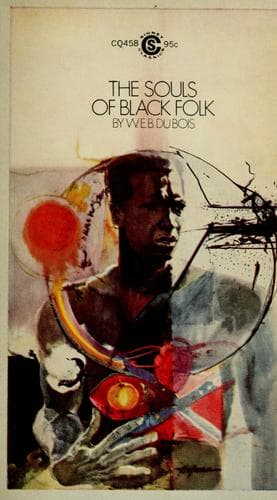
The Souls of Black FolkDu Bois, W. E. B. (William Edward Burghardt)
History
The Souls of Black Folk
Du Bois, W. E. B. (William Edward Burghardt)
African Americans
Morally and practically, the Freedmen’s Bank was part of the Freedmen’s
Bureau, although it had no legal connection with it. With the prestige
of the government back of it, and a directing board of unusual
respectability and national reputation, this banking institution had
made a remarkable start in the development of that thrift among black
folk which slavery had kept them from knowing. Then in one sad day came
the crash,—all the hard-earned dollars of the freedmen disappeared; but
that was the least of the loss,—all the faith in saving went too, and
much of the faith in men; and that was a loss that a Nation which
to-day sneers at Negro shiftlessness has never yet made good. Not even
ten additional years of slavery could have done so much to throttle the
thrift of the freedmen as the mismanagement and bankruptcy of the
series of savings banks chartered by the Nation for their especial aid.
Where all the blame should rest, it is hard to say; whether the Bureau
and the Bank died chiefly by reason of the blows of its selfish friends
or the dark machinations of its foes, perhaps even time will never
reveal, for here lies unwritten history.
Of the foes without the Bureau, the bitterest were those who attacked
not so much its conduct or policy under the law as the necessity for
any such institution at all. Such attacks came primarily from the
Border States and the South; and they were summed up by Senator Davis,
of Kentucky, when he moved to entitle the act of 1866 a bill “to
promote strife and conflict between the white and black races… by a
grant of unconstitutional power.” The argument gathered tremendous
strength South and North; but its very strength was its weakness. For,
argued the plain common-sense of the nation, if it is unconstitutional,
unpractical, and futile for the nation to stand guardian over its
helpless wards, then there is left but one alternative,—to make those
wards their own guardians by arming them with the ballot. Moreover, the
path of the practical politician pointed the same way; for, argued this
opportunist, if we cannot peacefully reconstruct the South with white
votes, we certainly can with black votes. So justice and force joined
hands.
Public-domain text, read in full here on John Shaqi.
Reviews
Reviews
No reviews yet
Be the first to share your thoughts on this work.
Join the Discussion
Join the discussion
Sign in to leave a comment or review.
Sign InorCreate an account