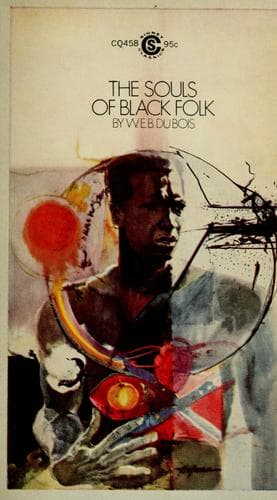
The Souls of Black FolkDu Bois, W. E. B. (William Edward Burghardt)
History
The Souls of Black Folk
Du Bois, W. E. B. (William Edward Burghardt)
African Americans
beaten to a jelly and his own mother namelessly assaulted, that the
meek shall inherit the earth. Above all, nothing is more convenient
than to heap on the Freedmen’s Bureau all the evils of that evil day,
and damn it utterly for every mistake and blunder that was made.
All this is easy, but it is neither sensible nor just. Someone had
blundered, but that was long before Oliver Howard was born; there was
criminal aggression and heedless neglect, but without some system of
control there would have been far more than there was. Had that control
been from within, the Negro would have been re-enslaved, to all intents
and purposes. Coming as the control did from without, perfect men and
methods would have bettered all things; and even with imperfect agents
and questionable methods, the work accomplished was not undeserving of
commendation.
Such was the dawn of Freedom; such was the work of the Freedmen’s
Bureau, which, summed up in brief, may be epitomized thus: for some
fifteen million dollars, beside the sums spent before 1865, and the
dole of benevolent societies, this Bureau set going a system of free
labor, established a beginning of peasant proprietorship, secured the
recognition of black freedmen before courts of law, and founded the
free common school in the South. On the other hand, it failed to begin
the establishment of good-will between ex-masters and freedmen, to
guard its work wholly from paternalistic methods which discouraged
self-reliance, and to carry out to any considerable extent its implied
promises to furnish the freedmen with land. Its successes were the
result of hard work, supplemented by the aid of philanthropists and the
eager striving of black men. Its failures were the result of bad local
agents, the inherent difficulties of the work, and national neglect.
Such an institution, from its wide powers, great responsibilities,
large control of moneys, and generally conspicuous position, was
naturally open to repeated and bitter attack. It sustained a searching
Congressional investigation at the instance of Fernando Wood in 1870.
Its archives and few remaining functions were with blunt discourtesy
transferred from Howard’s control, in his absence, to the supervision
of Secretary of War Belknap in 1872, on the Secretary’s recommendation.
Finally, in consequence of grave intimations of wrong-doing made by the
Secretary and his subordinates, General Howard was court-martialed in
1874. In both of these trials the Commissioner of the Freedmen’s Bureau
was officially exonerated from any wilful misdoing, and his work
commended. Nevertheless, many unpleasant things were brought to
light,—the methods of transacting the business of the Bureau were
faulty; several cases of defalcation were proved, and other frauds
strongly suspected; there were some business transactions which savored
of dangerous speculation, if not dishonesty; and around it all lay the
smirch of the Freedmen’s Bank.
Public-domain text, read in full here on John Shaqi.
Reviews
Reviews
No reviews yet
Be the first to share your thoughts on this work.
Join the Discussion
Join the discussion
Sign in to leave a comment or review.
Sign InorCreate an account